
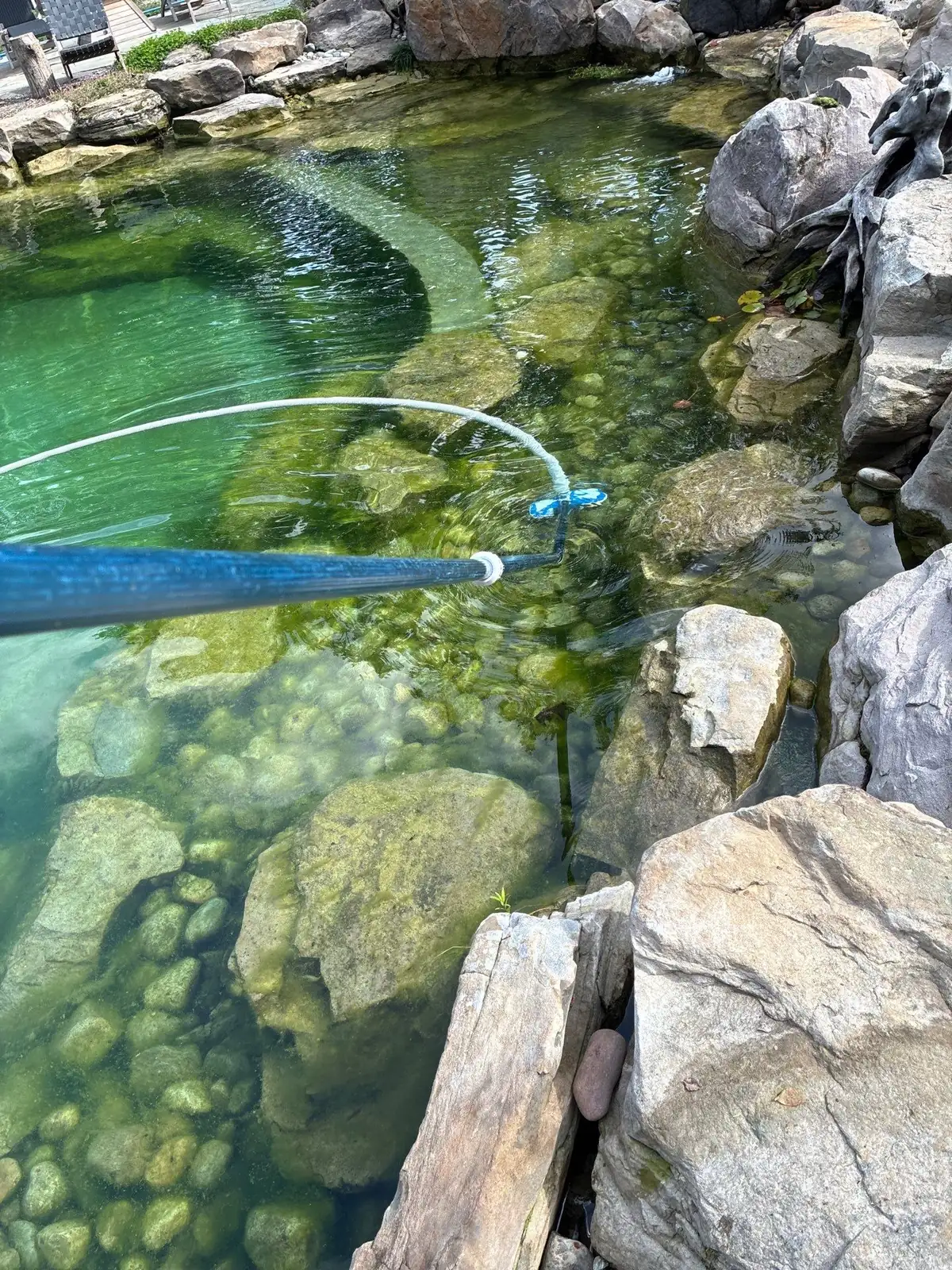
Koi pond maintenance requires weekly water quality testing, biweekly filter cleaning, seasonal feeding adjustments, and annual deep cleanouts to keep fish healthy and water clear. Whether you built your pond last year or inherited one with your property, following a consistent maintenance schedule is the single most important factor in koi health and water clarity.
The average koi can live 25 to 35 years with proper care, and some Japanese koi have been documented living beyond 200 years. That longevity depends entirely on water quality and consistent maintenance. Here in Delaware and Southeastern Pennsylvania, our four distinct seasons add complexity that pond owners in milder climates do not face. This guide covers exactly what you need to do and when.
Weekly Koi Pond Maintenance Tasks
Weekly maintenance is your early warning system. Catching a water quality shift early prevents fish stress, disease outbreaks, and expensive emergency interventions.
Water Quality Testing
Test your pond water every week for five parameters: pH (ideal range 7.0-8.0), ammonia (should be 0 ppm), nitrite (should be 0 ppm), nitrate (under 40 ppm), and dissolved oxygen (above 7 ppm). A standard liquid test kit costs $25-40 and lasts several months. Digital meters are faster but require calibration. Any ammonia reading above 0.25 ppm or pH outside the 6.5-8.5 range requires immediate action.
Skimmer and Surface Inspection
Empty your skimmer basket or net at least once per week. In fall, you may need to empty it daily. Leaves and organic debris that sit in the skimmer decompose and release tannins and ammonia back into the water. While you are at the skimmer, visually inspect the water surface for excessive foam, oil films, or unusual odor, all of which signal biological imbalance.
Fish Observation
Spend five minutes watching your koi during feeding. Healthy koi are active, swim in smooth patterns, and eat eagerly. Warning signs include: flashing (rubbing against rocks), clamped fins, isolation from the group, surface gasping, white spots, red streaks on fins, or loss of appetite. Early detection of parasites or bacterial infections makes treatment far simpler and less stressful for the fish. If you notice persistent symptoms, contact a pond professional before attempting DIY treatments that can disrupt your biological filtration.
Biweekly Maintenance Tasks
Filter Media Cleaning
Your biological filter media should be rinsed every two weeks during the active season (April through October in Delaware). Always rinse filter pads and biomedia in pond water, never tap water. Chlorine and chloramine in municipal water kill the beneficial bacteria your filter depends on. Squeeze out mechanical filter pads until the water runs mostly clear, but do not scrub biomedia aggressively. You want to remove excess waste without destroying the bacterial colonies.
Pump and Plumbing Check
Inspect your pump intake for debris buildup that restricts flow. Check that your waterfall or stream is running at full volume. Reduced flow usually means a clogged pre-filter, partially blocked impeller, or air lock in the plumbing. A pump running at 50% capacity means your filtration is running at 50% capacity, and water quality will decline within days. For ponds with bottom drains and external filters, verify that drain flow is consistent and filter chambers are not overflowing.
Monthly Maintenance Tasks
Aquatic Plant Care
Remove dead leaves and spent flower heads from marginal and aquatic plants monthly. Overgrown water hyacinth, water lettuce, and other floating plants should be thinned to cover no more than 60-70% of the pond surface. While aquatic plants provide shade and nutrient absorption, too much coverage reduces gas exchange and can deplete oxygen overnight. Fertilize potted water lilies monthly during the growing season with aquatic plant fertilizer tablets pushed directly into the soil, never dissolved in the water.
Partial Water Changes
Replace 10-15% of your pond volume monthly with dechlorinated water. This dilutes accumulated nitrates, replenishes minerals, and refreshes the overall chemistry. In Delaware, municipal water contains chloramine (not just chlorine), which does not evaporate and requires a dedicated dechlorinator. Add the dechlorinator to the new water before it enters the pond, or use a dechlorinating hose attachment.
Seasonal Koi Pond Calendar for Delaware
Spring Startup (March-April)
Spring is the most critical season for your pond. As water temperatures rise above 50 degrees F, koi metabolisms activate but their immune systems lag behind, creating a vulnerability window for disease. Schedule your annual pond cleanout before water temperatures exceed 55 degrees F. This removes accumulated winter sludge, resets biological filtration, and gives your fish a clean start. Begin feeding wheat-germ-based food when water reaches 50 degrees F, transitioning to high-protein food above 65 degrees F. Start your biological filter at least two weeks before increasing feeding, as beneficial bacteria need time to colonize.
Summer Peak Care (May-September)
Summer is when your maintenance routine matters most. Feed koi 2-3 times daily with high-protein food when water is 65-85 degrees F, but only as much as they consume in five minutes. Monitor dissolved oxygen closely during heat waves, as warm water holds less oxygen. Run your waterfall or aerator 24 hours a day. Check for string algae and remove by hand or with a brush before it overtakes surfaces. Top off water levels weekly to compensate for evaporation, always using dechlorinated water. Professional maintenance visits during summer catch issues before they become emergencies.
Fall Preparation (October-November)
As water drops below 60 degrees F, switch back to wheat-germ food. Stop feeding entirely below 50 degrees F as koi cannot digest food at these temperatures and undigested food causes internal infections. Install fall netting before leaves start dropping to prevent organic debris from entering the pond. Remove any fallen leaves daily if netting is not installed. Trim back dead plant material, remove tropical plants for indoor storage, and cut hardy water lily foliage to just above the crown. This is the best time to add cold-water beneficial bacteria to help break down organic matter through winter.
Winter Shutdown (December-February)
Delaware winters require a floating de-icer or aerator to maintain a gas exchange hole in ice. Never break ice by hitting it, as the shock wave can injure or kill fish. Koi enter torpor below 40 degrees F and should not be fed, disturbed, or handled. Keep your pump running if your system is designed for it, or shut down and remove the pump for storage if recommended by your installer. Monitor the de-icer weekly to ensure it is functioning. A completely sealed pond traps toxic gases that can kill fish within days. Professional winter shutdown services ensure your equipment is properly winterized and your fish are protected.
Common Koi Health Issues to Watch For
Most koi health problems trace back to water quality. Ammonia burns appear as red streaks on fins and body. Ich (white spot disease) presents as small white dots covering the body and fins, and is triggered by temperature swings. Ulcers (open red sores) are bacterial infections that enter through damaged scales, often caused by parasites or rough handling. Fin rot causes frayed, discolored fin edges and typically follows stress or poor water quality. Dropsy, recognized by a swollen body and raised scales (pine cone appearance), is often a symptom of organ failure and has a poor prognosis.
The most effective treatment for all of these conditions is prevention through consistent water quality management. If you do notice symptoms, test your water immediately and correct any parameters that are out of range before adding medications.
When to Call a Professional
Some situations require professional expertise rather than DIY intervention. Contact a professional pond maintenance provider when:
- Ammonia or nitrite levels remain elevated after water changes and you cannot identify the cause
- Multiple fish show disease symptoms simultaneously, indicating a systemic water quality issue
- Your pond is losing water faster than normal evaporation, which may indicate a leak
- Green water persists despite adequate filtration, suggesting undersized equipment or excessive nutrient load
- You are planning a spring cleanout and want it done safely without fish stress
- Your filtration system needs upgrading to handle your fish load
Rock Water Ponds' Maintenance Membership programs take the guesswork out of koi pond care. Our Bronze, Gold, and Platinum tiers provide scheduled visits from trained pond professionals who monitor water quality, clean filters, inspect equipment, and catch problems before they escalate. Most pond owners find that a membership costs less annually than the emergency repairs they were paying for before.
Have questions about maintaining your koi pond? Contact Rock Water Ponds or call (484) 844-3863 for expert advice and service across Delaware and Southeastern Pennsylvania.