
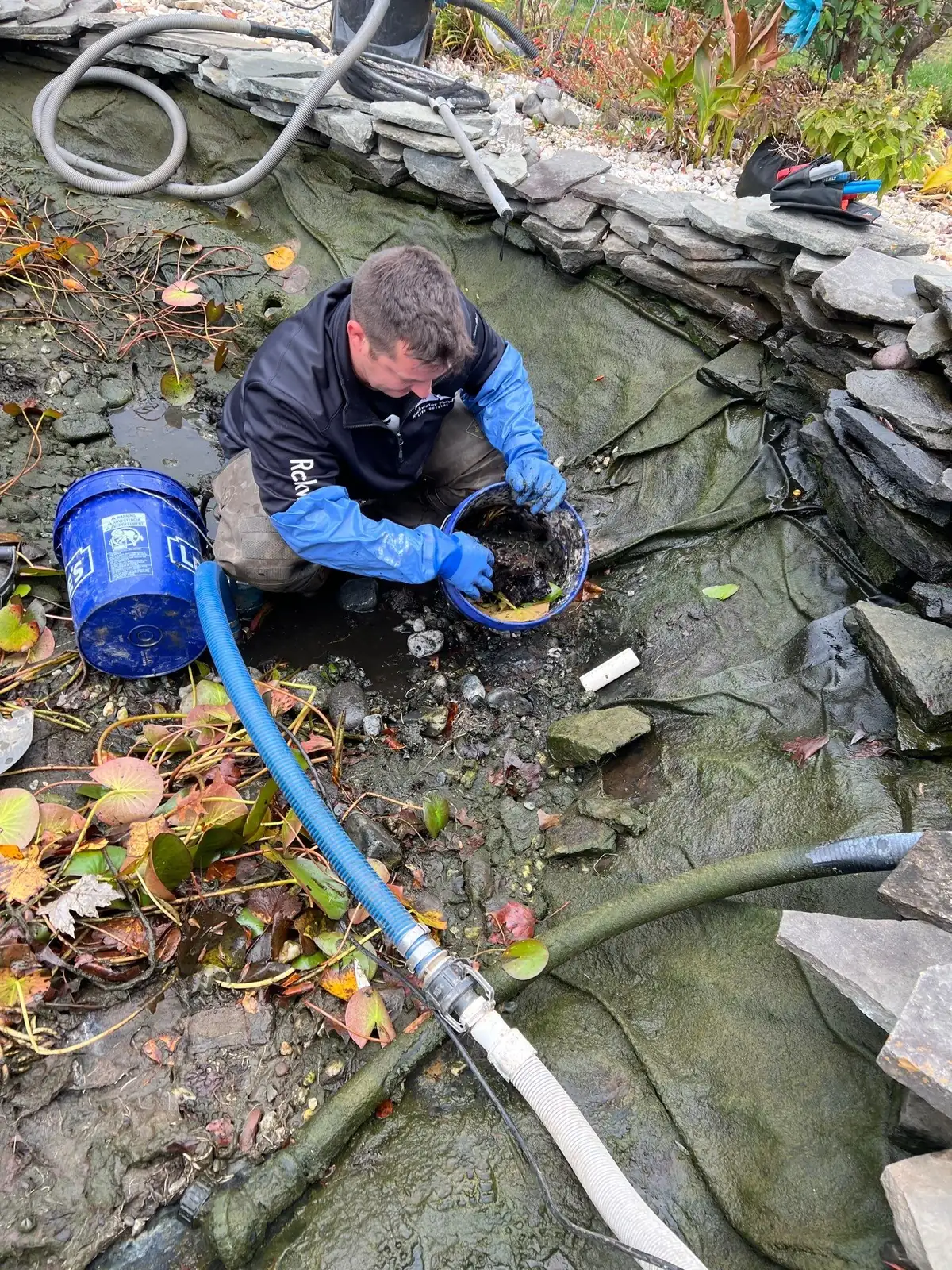
Professional pond cleaning in Delaware costs between $300 and $800 for a standard residential pond, with the price determined by pond size, depth, condition, fish count, and whether a full cleanout or maintenance cleaning is needed. Rock Water Ponds provides transparent pricing so you know exactly what to expect before scheduling service.
This guide breaks down pond cleaning costs by size, explains the factors that move pricing up or down, compares maintenance cleaning versus full cleanouts, and shows how a maintenance membership can reduce your annual pond care costs by 30-50%.
Pond Cleaning Cost by Size
Pond size is the primary factor in cleaning cost. Here is what professional pond cleaning typically costs in the Delaware and SE Pennsylvania market:
| Pond Size | Volume | Maintenance Clean | Full Cleanout |
|---|---|---|---|
| Small | Under 500 gallons | $150 - $300 | $300 - $500 |
| Medium | 500 - 2,000 gallons | $200 - $400 | $400 - $600 |
| Large | 2,000 - 5,000 gallons | $300 - $500 | $600 - $800 |
| Extra Large | 5,000+ gallons | $400+ | $800+ |
These ranges reflect the Delaware Valley market. Costs in the Philadelphia metro area tend to be on the higher end, while rural areas of Chester County and New Castle County are typically more moderate.
Factors That Affect Pond Cleaning Cost
Beyond size, several factors determine where your pond falls within the cost range:
Pond Depth and Access
Deeper ponds require more time and equipment. A 3-foot-deep pond is straightforward, while a 6-foot koi pond requires specialized pumping equipment and more labor hours. Ponds with limited access (steep slopes, narrow gates, no nearby parking for equipment) add to the labor cost because materials must be carried further.
Current Condition and Debris Level
A pond that receives regular maintenance costs less to clean than one that has been neglected for years. Heavy sludge accumulation on the bottom, dense algae overgrowth, and compacted organic debris all increase the time and effort required. If your pond has not been cleaned in over two years, expect costs on the higher end of the range.
Fish Count and Relocation
Full cleanouts that require fish relocation add complexity. Koi and goldfish must be carefully netted, placed in aerated holding tanks with pond water, and returned after cleaning. A pond with 20-plus koi takes significantly more time to evacuate safely than one with 5 small goldfish. Fish relocation is always included in a full cleanout price, but more fish means more labor.
Filtration System Reset
If your cleanout includes disassembling, cleaning, and reassembling a multi-chamber filtration system, that adds 1-2 hours of labor compared to a simple pump-and-clean job. Bottom drain systems and external bead filters require careful handling to avoid damaging components. Some cleanouts also include replacing UV bulbs, worn gaskets, or deteriorated filter pads, with parts billed separately.
Maintenance Cleaning vs. Full Cleanout
Understanding the difference helps you choose the right service and avoid paying for more than you need.
Maintenance Cleaning
Maintenance cleaning is a lighter-touch service that keeps your pond running between annual cleanouts. It typically includes skimming surface debris, vacuuming accumulated muck from the bottom, cleaning filter media, trimming aquatic plants, testing water quality, and inspecting equipment. Fish stay in the pond during maintenance cleanings. This is what you receive during regular membership visits.
Full Cleanout
A full cleanout is a comprehensive reset. The pond is drained completely, fish are relocated to holding tanks, every rock and surface is pressure-washed, all sludge is removed, the filtration system is disassembled and cleaned, and the pond is refilled with dechlorinated water. Fish are temperature-acclimated and returned once water chemistry stabilizes. Most ponds need one full cleanout per year, ideally in early spring before water temperatures exceed 55 degrees F.
DIY Pond Cleaning vs. Professional Service
Some pond owners attempt DIY cleaning to save money. While basic skimming and filter rinsing are fine to do yourself, full cleanouts carry real risks when done without experience:
- Fish stress and mortality: Improper netting techniques, temperature shock during relocation, and ammonia spikes in holding tanks can injure or kill fish. Professional pond cleaners use aerated, temperature-matched holding systems.
- Ecosystem disruption: Over-cleaning removes beneficial bacteria colonies that take 4-6 weeks to re-establish. A professional knows how much to clean and how much to leave, maintaining the biological balance.
- Chemical misuse: Adding too much dechlorinator, algaecide, or pH adjuster causes water chemistry crashes that can be fatal. Professionals test and dose precisely.
- Equipment damage: Disassembling and reassembling filtration components incorrectly leads to leaks, airlock issues, and premature pump failure. A professional cleanout includes a full system inspection.
The cost of replacing dead koi (quality Japanese koi range from $100 to $5,000+) or repairing damaged equipment almost always exceeds the savings from a DIY cleanout.
How Maintenance Memberships Save Money
Most pond owners save 30-50% over per-visit pricing with a maintenance membership. Here is a real comparison for a medium-sized pond (1,000 gallons):
| Approach | Services Per Year | Estimated Annual Cost |
|---|---|---|
| Per-Visit Pricing | 1 cleanout + 6 maintenance visits | $2,300 - $3,000 |
| Bronze Membership ($200/mo) | 1 cleanout + 10 visits | $1,600 |
| Gold Membership ($400/mo) | 1 cleanout + 22 visits | $3,200 |
| Platinum Membership ($750/mo) | 1 cleanout + 40+ visits + ClearWater Guarantee | $6,000 |
Membership pricing is based on an 8-month active season (March through October) in Delaware. The Bronze tier is the best value for pond owners who want professional care without premium pricing. Gold and Platinum tiers are designed for larger ponds, koi collectors, and owners who want hands-off pond management.
Beyond cost savings, memberships provide priority scheduling. Spring cleanout season in Delaware runs from mid-March through late April, and per-visit customers often wait 2-3 weeks for an opening. Membership clients are scheduled first.
Seasonal Pricing Patterns
Pond cleaning demand in Delaware follows a predictable seasonal pattern. Spring (March-April) is the busiest season as every pond needs a cleanout after winter. If you wait until May to schedule, expect longer wait times and potentially higher pricing due to demand. Fall (October-November) is the second busiest period for winterization and final cleanups.
The best time to book your spring cleanout is in January or February, before the rush begins. Membership clients are scheduled automatically and do not need to worry about availability.
Get an Accurate Quote for Your Pond
Every pond is different, and the cost ranges above are general guidelines. Rock Water Ponds provides free, no-obligation estimates for pond cleaning services across Delaware and Southeastern Pennsylvania. We will inspect your pond, assess its condition, and give you an exact price before any work begins.
Contact Rock Water Ponds or call (484) 844-3863 to schedule your free estimate. Whether you need a one-time cleanout or want to explore our membership options, we will find the right fit for your pond and your budget.