
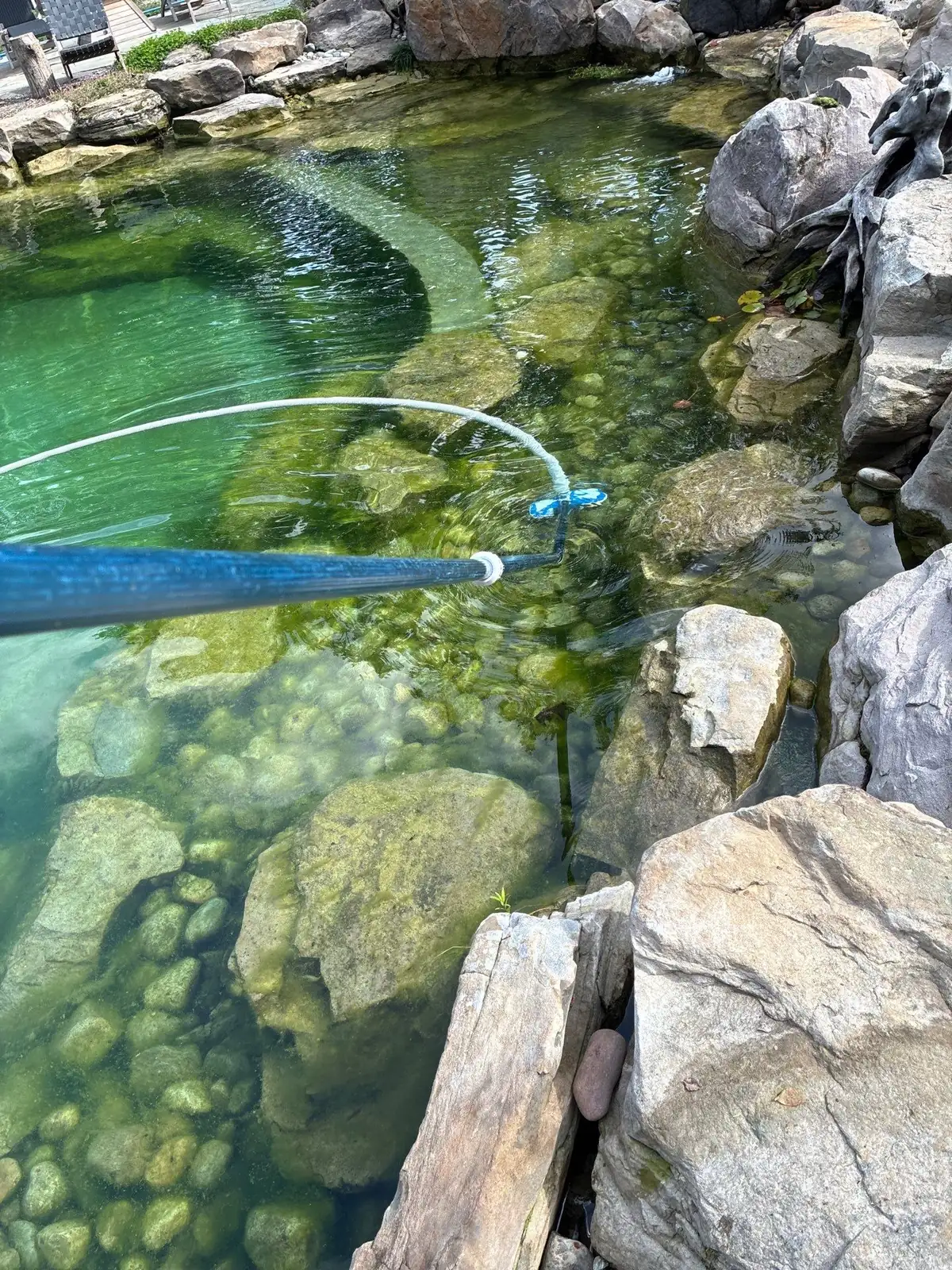
Controlling pond algae requires reducing excess nutrients (nitrogen and phosphorus), establishing sufficient biological filtration, maintaining 60-70% surface coverage with aquatic plants, and avoiding chemical treatments that disrupt the ecosystem cycle. Algae is not a disease. It is a symptom of nutrient imbalance, and treating the symptom without fixing the underlying cause guarantees the problem returns within weeks.
Here in Delaware and Southeastern Pennsylvania, algae season begins in earnest during May. Water temperatures climb past 60 degrees F, daylight hours increase, and the nutrients that accumulated over winter and early spring become fuel for rapid algae growth. If your pond turned green this month, you are not alone. Understanding the mechanics behind algae growth is the first step toward solving it permanently rather than chasing it with chemicals all summer.
Why Algae Grows in Ponds
Algae needs three things to thrive: sunlight, warm water, and dissolved nutrients. Remove or reduce any one of those three inputs and algae growth slows. The challenge for pond owners is that you cannot eliminate sunlight or warm water without fundamentally changing your pond, so the primary lever you control is nutrient load.
The two nutrients that drive algae are nitrogen (from fish waste, decomposing organic matter, and runoff) and phosphorus (from fertilizer runoff, tap water, and decomposing leaves). In a balanced ecosystem, beneficial bacteria in your biological filter convert ammonia to nitrite and then to nitrate, and plants absorb the nitrate before algae can use it. When any part of that cycle breaks down, algae fills the gap.
Common Nutrient Sources Delaware Pond Owners Miss
- Lawn fertilizer runoff -- if your yard slopes toward the pond, every rainfall washes phosphorus and nitrogen directly into the water. This is the number one hidden algae driver in suburban ponds across Wilmington, Hockessin, and Pike Creek.
- Overfeeding fish -- uneaten food decomposes on the bottom and releases ammonia. Feed only what your koi consume within five minutes per feeding session.
- Decomposing leaf litter -- leaves that were not removed during spring startup or missed by fall netting continue releasing nutrients throughout the season.
- Overstocked fish -- too many fish for your pond volume produces more ammonia than the biological filter can process. A general guideline is one inch of koi per ten gallons of water for a well-filtered pond.
- Insufficient biological filtration -- undersized filters or filters that were not properly colonized after winter cannot keep up with the nutrient load once water temperatures exceed 65 degrees F.
Green Water vs. String Algae: Different Problems, Different Solutions
Not all algae is the same, and mistaking one type for another leads to ineffective treatment. The two types you will encounter in Delaware ponds are green water (suspended single-cell algae) and string algae (also called filamentous algae or blanket weed).
Green Water (Suspended Algae)
Green water is caused by millions of microscopic single-cell algae floating in the water column. Your pond looks like pea soup. You cannot see the bottom. Fish disappear from view six inches below the surface. This type of algae responds well to UV clarification because the water passes through the UV unit and the algae cells are killed as they flow past the bulb.
A properly sized UV clarifier will clear green water within seven to fourteen days of installation. The key word is "properly sized." A UV unit rated for a 1,000-gallon pond will not clear a 5,000-gallon pond. Flow rate matters as well -- the water needs to pass slowly enough through the UV chamber for adequate exposure. This is where professional system design through Rock Water Ponds' ClearWater Guarantee program makes a measurable difference. We spec UV units matched to your exact pond volume and pump flow rate, not the generic recommendations on the box.
String Algae (Filamentous Algae)
String algae grows on rocks, waterfalls, stream beds, and pond walls. It looks like long green hair or thick mats of green cotton. Unlike green water, string algae is not killed by UV clarifiers because it is attached to surfaces and never passes through the UV unit.
Some string algae is actually beneficial. A thin coating on rocks provides surface area for beneficial bacteria and helps oxygenate water. It becomes a problem when it mats over 30% of your rock surfaces, clogs skimmer intakes, or blocks water flow through your stream or waterfall.
Mechanical removal is the most effective immediate treatment. Pull it out by hand, brush it off rocks with a stiff brush, or wind it around a stick like cotton candy. For long-term control, string algae responds best to nutrient reduction and increased plant competition rather than chemical treatments.
Five Strategies That Actually Work for Pond Algae Control
1. Increase Aquatic Plant Coverage
Plants are your most powerful long-term algae control tool. They compete directly with algae for the same nutrients. When plants win the nutrient race, algae starves. The target is 60-70% surface coverage including a mix of floating plants (water hyacinth, water lettuce), marginal plants (iris, pickerel rush, sweet flag), and submerged oxygenators (hornwort, anacharis).
May is the ideal time to add plants in Delaware. Hardy varieties can go in immediately. Wait until water temperatures stay above 65 degrees F (typically mid-May in our area) before adding tropical floaters like water hyacinth and water lettuce. Our aquatic plant guide covers species selection for Delaware pond conditions in detail.
2. Optimize Your Biological Filtration
Your biological filter is the engine that processes fish waste and decomposing organic material before those nutrients feed algae. If your filter is undersized, improperly maintained, or was not seeded with beneficial bacteria after winter startup, it cannot keep up.
Signs your biological filtration is insufficient include persistent ammonia readings above 0.25 ppm, recurring green water despite UV treatment, and rapid string algae regrowth within days of removal. The solution is typically a combination of increasing filter media volume, adding a dedicated external filter with bottom drain, and dosing beneficial bacteria weekly during the active season. This is the core premise behind the ClearWater Guarantee -- right-sizing filtration to pond volume so the biology can do its job.
3. Reduce Nutrient Inputs
Audit every nutrient source entering your pond. Switch to phosphorus-free lawn fertilizer or create a three-foot buffer zone of unfertilized ground around the pond perimeter. Feed fish appropriate amounts at appropriate times -- use the temperature-based feeding schedule from our koi pond maintenance guide. Remove dead leaves and plant debris before they decompose. Trim back overhanging trees if leaf drop is a recurring problem.
If your pond receives surface runoff from your yard or a neighboring property, consider installing a simple rain garden or berm to redirect the flow. In areas like Greenville and Chadds Ford where properties have significant grade, this runoff diversion alone can cut algae problems by 40-60%.
4. Install or Upgrade UV Clarification
UV clarifiers are the most reliable treatment for green water specifically. They work by exposing single-cell algae to ultraviolet light, which damages the cell wall and causes the algae to clump together and get caught by your mechanical filter. A correctly installed UV system keeps water clear continuously without chemicals.
Important timing note: if you just completed a spring startup, wait at least two weeks before turning on UV. The UV light kills free-floating bacteria, including the beneficial bacteria you need to colonize your biofilter. Let the biological filter establish first, then activate the UV to handle suspended algae.
5. Perform a Full Cleanout When Needed
When organic sludge on the bottom of your pond exceeds two inches, no amount of filtration or plant coverage will overcome the nutrient load it releases. The sludge layer acts as a slow-release fertilizer feeding algae all season long. A full pond cleanout -- draining, pressure washing, debris removal, and refilling -- resets the nutrient baseline and gives your filtration system a fighting chance.
Rock Water Ponds sees the most dramatic water quality improvements in ponds that have not been cleaned out in two or more years. In many cases, a single professional cleanout followed by consistent maintenance eliminates chronic algae problems that the owner had been battling for multiple seasons.
What Not to Do: Common Algae Treatment Mistakes
The frustration of watching your pond turn green leads many owners to reach for fast fixes that create bigger problems. Here are the approaches we consistently advise against.
Chemical Algaecides
Chemical algae treatments kill algae cells quickly, often clearing the water within 48 hours. The problem is twofold. First, the dead algae sinks to the bottom and decomposes, releasing all its stored nutrients back into the water, which feeds the next bloom. You enter a treatment-and-regrowth cycle that never resolves. Second, broad-spectrum algaecides also kill beneficial bacteria in your biofilter, reducing your pond's ability to process nutrients naturally. Each treatment makes the underlying problem worse.
Frequent Large Water Changes
Draining and refilling large portions of pond water (more than 20% at a time) introduces fresh tap water loaded with chloramine. Delaware municipal water requires dechlorination treatment. Frequent large water changes also disrupt the established biological balance, stress fish through temperature and pH swings, and waste water without addressing the root nutrient problem.
Ignoring the Problem Until Fall
Some pond owners accept green water as a summer inevitability and plan to deal with it during a fall cleanout. While a fall cleanout helps, allowing algae to dominate all summer accelerates organic buildup, depletes dissolved oxygen (especially dangerous during hot August nights when water holds less oxygen), and creates conditions for fish disease. Algae control in May prevents bigger problems in August.
When Algae Requires Professional Help
DIY algae management works well for mild, seasonal blooms in small ponds with adequate filtration. But certain situations call for professional assessment because the underlying system needs modification, not just symptom treatment.
- Green water persists for more than four weeks despite UV treatment and beneficial bacteria
- Ammonia or nitrite levels remain above zero despite regular testing and water changes
- String algae regrows to full coverage within one week of removal
- Fish are gasping at the surface (indicating oxygen depletion from algae die-off)
- The pond has not had a professional cleanout in over two years
- The filtration system is more than ten years old or was not professionally designed for the current pond volume
Rock Water Ponds' Maintenance Membership programs address algae proactively through scheduled visits, water quality monitoring, seasonal biological treatments, and filtration system oversight. Bronze members receive monthly visits that catch nutrient problems before they become visible blooms. Gold and Platinum members get biweekly and weekly attention respectively, which keeps algae managed continuously through the active season.
The Bottom Line on Pond Algae in Delaware
Algae is not a sign that your pond is failing. It is a signal that the nutrient-to-filtration-to-plant ratio is out of balance. The most effective approach combines reducing nutrient inputs, increasing plant competition, ensuring adequate biological and UV filtration, and performing timely cleanouts. Chemical shortcuts create dependency cycles that make the problem harder to solve over time.
If your pond is green right now and you want it resolved before summer, contact Rock Water Ponds or call (484) 844-3863 for a professional assessment. We serve pond owners across Delaware and Southeastern Pennsylvania -- from Wilmington and Hockessin to Kennett Square, Chadds Ford, and Media.