
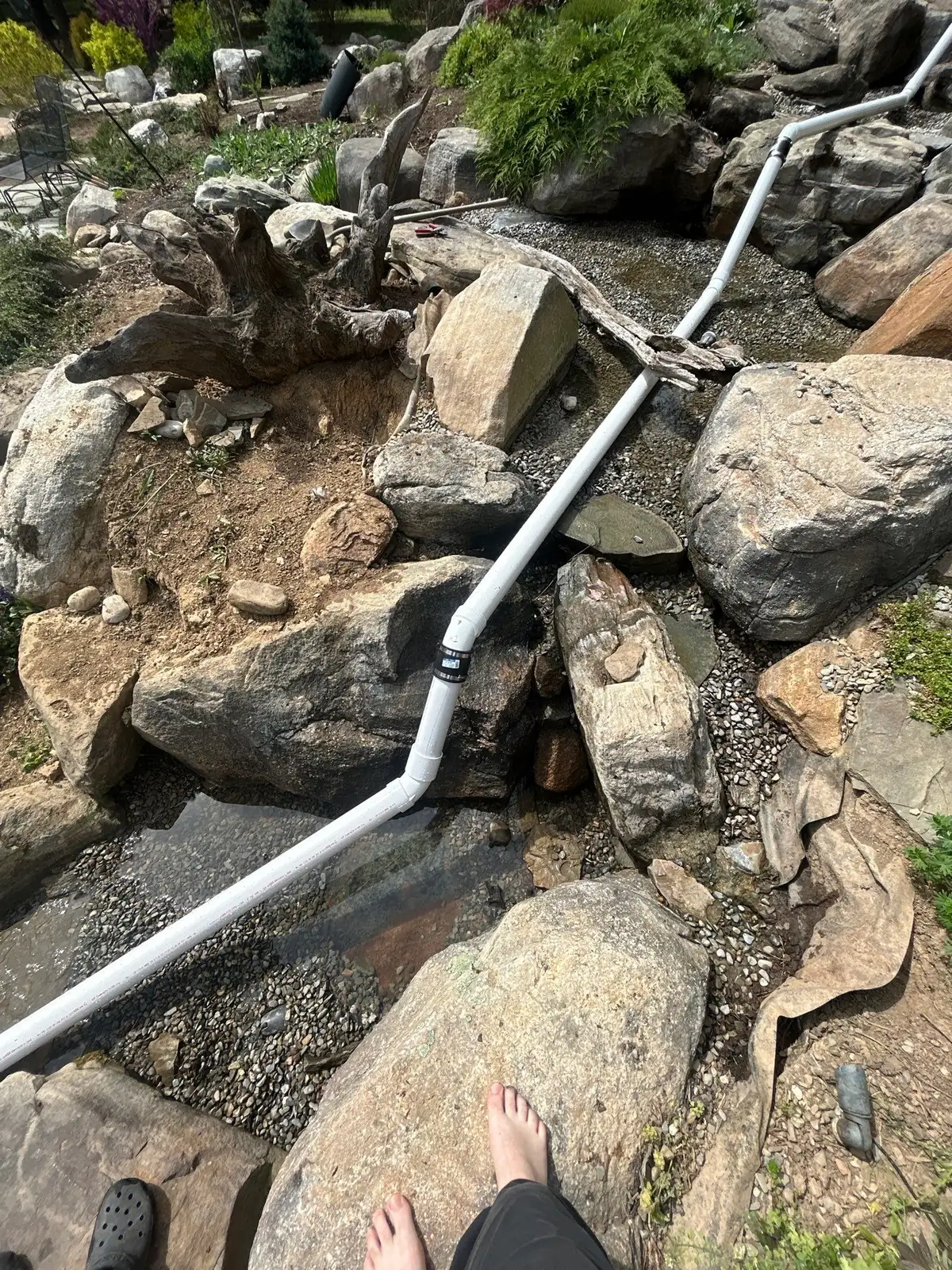
If your Wilmington pond keeps losing water, the most useful first step is to document the pattern before assuming the liner has failed. Water can leave a pond through evaporation, splash, a low edge, a waterfall or stream, a plumbing connection, plant roots, equipment, or liner damage. The location matters because the fix for each cause is different.
Rock Water Ponds lists leak diagnostics as a dedicated service and states a 100% guarantee that the leak location will be found. That does not mean every water-loss call starts by tearing apart the pond. Good diagnostics starts with clues: how quickly the water drops, whether the pump is running, where the ground is wet, what changed recently, and whether Wilmington weather or site conditions could be part of the issue.
Is It a Leak or Normal Evaporation?
Evaporation is real, especially during hot, dry, windy weather. A pond with a wide surface area, waterfall splash, shallow stream, or strong sun exposure can lose visible water without having a structural problem. The issue is consistency. If the pond drops the same small amount during a hot week, evaporation may be part of the answer. If it drops several inches a day, keeps falling after cooler weather, or stops at the same level each time, the pattern deserves diagnostics.
Before booking, mark the water level with a piece of tape, a rock reference, or a photo. Record the time and water level, then check again 24 hours later. Note whether the pump was on, whether there was rain, and whether you topped the pond off. This simple tracking gives the diagnostic visit a better starting point than a general statement that the pond is losing water.
Why Does Pump-On Versus Pump-Off Matter?
The pump status can separate two broad categories of leaks. If water loss happens mainly when the pump is running, the problem may be in the waterfall, stream, plumbing, filter, fittings, or return path. Water may be escaping behind rocks, over a settled liner edge, through a loose connection, or from a stream area where the liner has shifted.
If the pond loses water even when the pump is off, the basin, liner, skimmer faceplate, low edge, or penetration points may need closer review. Do not leave fish without oxygen or circulation just to run a test. If the pond has fish, aeration needs, or warm-weather oxygen concerns, ask Rock Water Ponds what is safe before changing pump operation for long periods.
Can a Low Edge Look Like a Liner Leak?
Yes. Low edges are common because pond edging can settle, rocks can shift, soil can wash out, roots can lift material, and stormwater can undermine the perimeter. A low edge lets water escape over the liner without a hole in the liner itself. Homeowners often see a wet area beside the pond and assume the liner is punctured, but the water may simply be finding the lowest exit point.
Wilmington properties can add to that problem when yards slope toward a water feature or when older hardscape and mature planting beds direct runoff toward the pond. Heavy rain can move mulch and soil, expose liner edges, or change how water travels around the feature. That is why diagnostics should include the pond perimeter, waterfall edges, stream channels, skimmer area, and surrounding grade.
What If the Leak Is in the Waterfall or Stream?
Waterfalls and streams are frequent suspects because they move water above the pond basin. Splash can leave the system. A rock can redirect flow out of the liner path. Plants can wick water over an edge. Settled liner can allow a small stream leak that is only active when the pump is running. Filter boxes and return plumbing can also leak behind the visible stonework.
Photos help here. Take pictures of the waterfall running and turned off, the full stream path, any wet soil outside the liner, the filter, and the pump area. If you notice water appearing in one location only when the waterfall is active, include that detail in the service request.
What Should I Send Before Booking Leak Diagnostics?
Send the Wilmington service address, your phone number, several wide photos, close-ups of wet areas, equipment photos, and a simple timeline. Include the approximate pond size, whether fish are present, whether you have an auto-fill, whether the pond has a waterfall or stream, how often you add water, and how far the water drops in 24 hours.
If you have already tried anything, mention it. Helpful details include whether you cleaned the skimmer, changed pump settings, added water, turned off the waterfall briefly, noticed wet soil, saw air bubbles in plumbing, or had recent construction, planting, freeze-thaw movement, or stormwater issues. The goal is not to diagnose the leak over email; it is to prevent the wrong first visit.
Should I Book Maintenance, Cleanout, or Leak Diagnostics?
Use the symptom to choose the first conversation. If the water is green, cloudy, or full of debris but the level is stable, start with pond maintenance, pond maintenance in Wilmington, or a pond cleanout. If the water level keeps dropping, especially with a pattern tied to the pump, waterfall, or a repeated stopping point, ask about leak diagnostics first.
A neglected pond can need both. Sludge, leaves, and poor access may make diagnostics harder, while a leak can make routine maintenance feel impossible because the water level is constantly changing. Rock Water Ponds can help decide whether diagnostics, cleanout, or maintenance should come first based on photos and the water-loss pattern.
Why Local Conditions Matter in Wilmington
Wilmington ponds can sit under mature tree canopy, beside tight patios, near roof runoff, or on sloped lots that move water across the yard during storms. Those conditions can create wet spots that look like leaks, wash out pond edges, move mulch into the pond, or hide low liner areas under stone and planting beds. Older landscapes can also have established roots and settled hardscape that change how water moves around the feature.
Nearby homeowners in Greenville, Hockessin, Montchanin, New Castle, and Newark often face similar water-feature planning issues. You can review the broader Wilmington pond services page or the full service areas hub for coverage context.
Bottom Line Before You Book
Do not guess at a pond leak based only on a low water line. Track the drop, note pump status, photograph the system, and look for wet ground, low edges, waterfall splash, and recent changes. Then contact Rock Water Ponds through the estimate form or call (484) 844-3863. The better the intake details, the faster the diagnostic visit can focus on finding the actual source of water loss.