
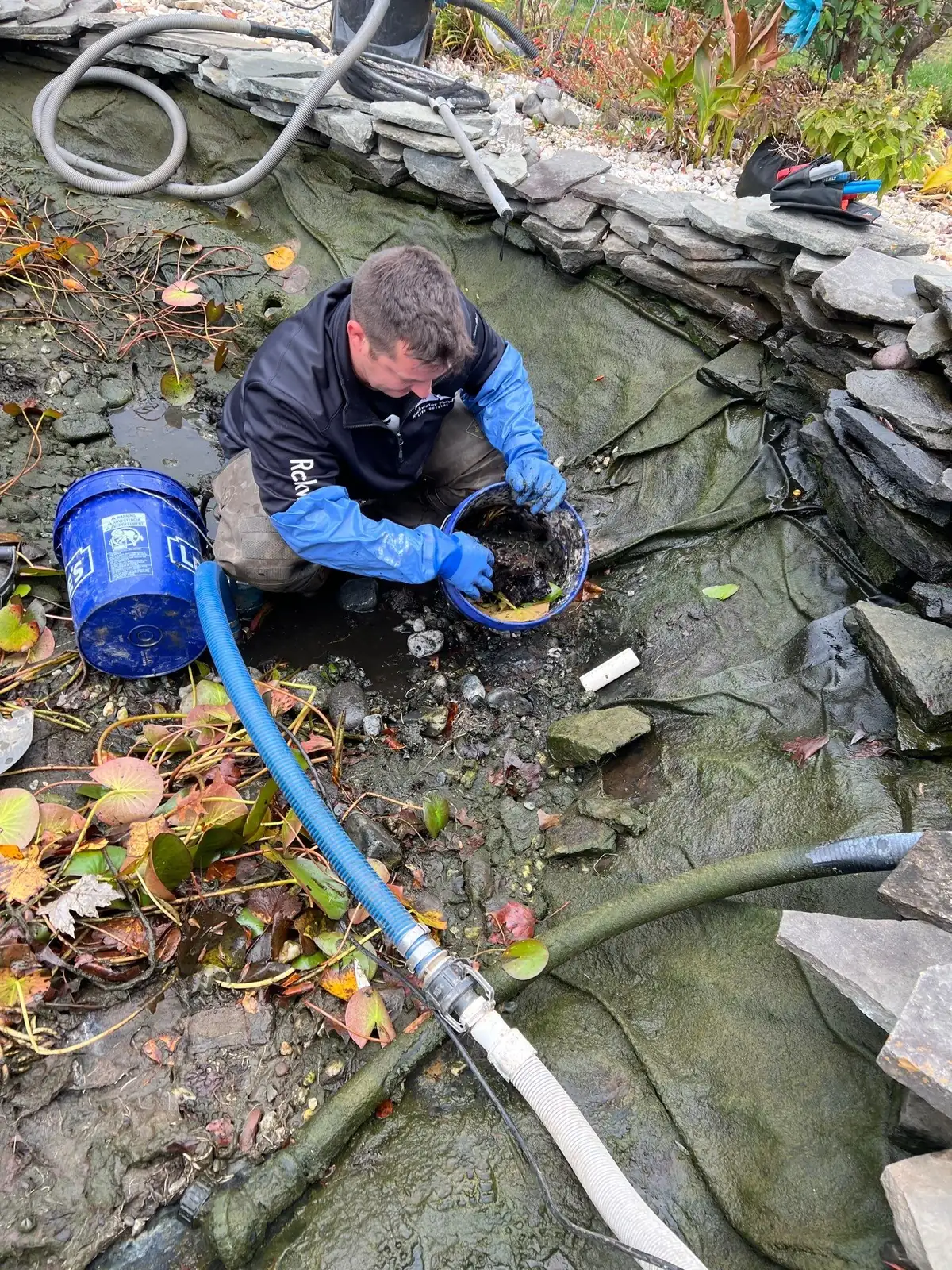
Professional fish relocation during pond cleanout in Delaware

Fish Relocation Services in Delaware & SE Pennsylvania

Fish relocation is the careful process of netting, transporting, and reintroducing koi, goldfish, and other pond fish when ponds need cleanouts, repairs, renovations, or when homeowners are moving to a new property. Done incorrectly, fish suffer stress injuries, slime coat damage, or death. Done by professionals, every fish arrives safely.
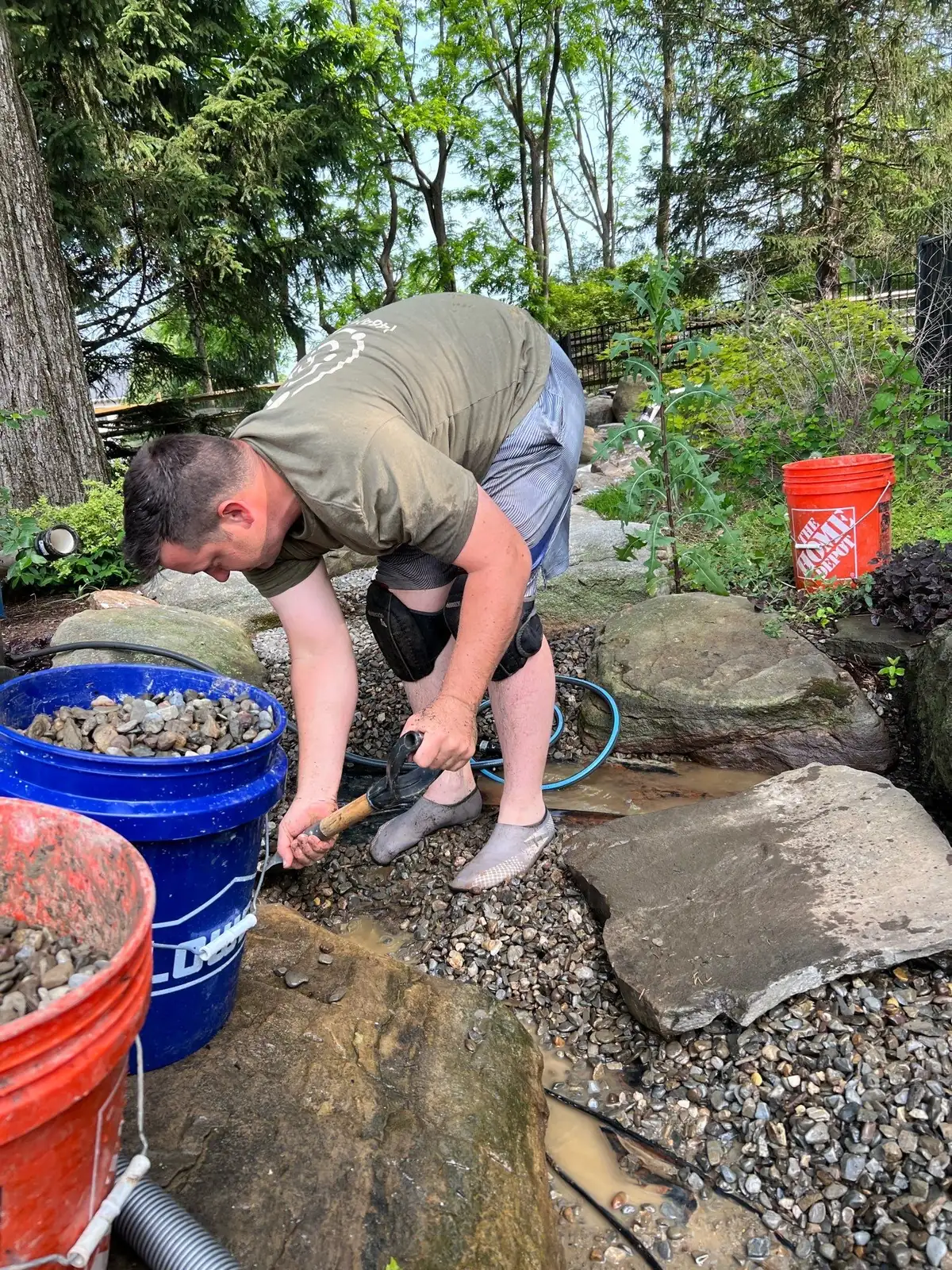
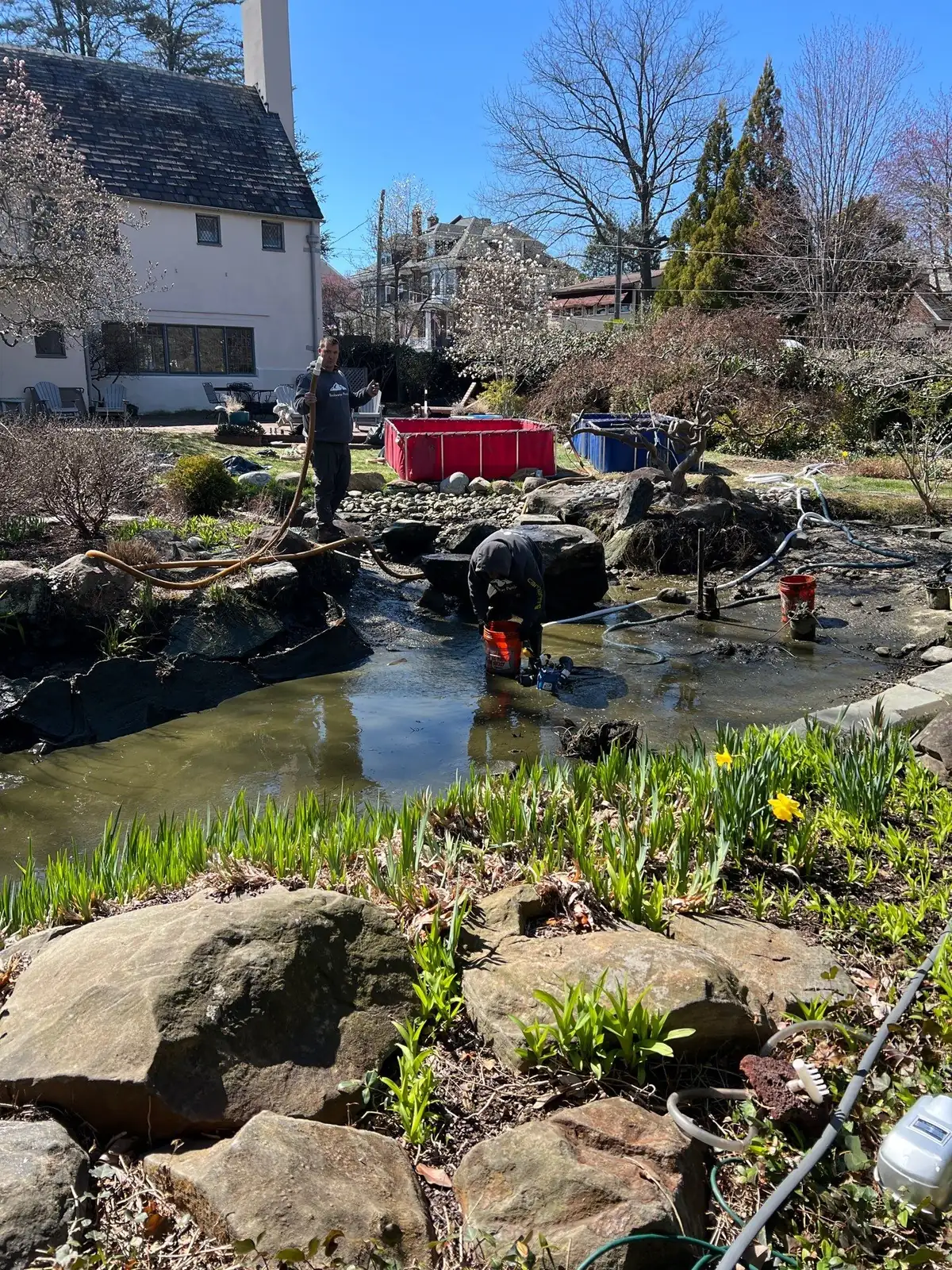
When Do Fish Need Professional Relocation?

Fish relocation is required whenever a pond needs to be fully or substantially drained. Attempting to catch koi and goldfish without proper equipment and technique almost always results in injuries -- torn fins, damaged slime coats, and stress responses that can prove fatal days after the event.

Professional relocation is not just about netting fish. It involves preparing conditioned holding water at the correct temperature, maintaining dissolved oxygen levels, monitoring ammonia during extended holds, and gradually acclimating fish back to their pond when the work is complete. Each step protects the fish investment that many pond owners have spent years building.

  • Spring and fall pond cleanouts that require full draining
  • Leak repairs that require lowering water levels below fish depth
  • Pond renovations, resizing, or complete rebuilds
  • Homeowner relocating and bringing their koi collection to a new property
  • Emergency situations -- predator damage, water quality crash, or equipment failure
  • Overpopulation management when breeding has exceeded pond capacity
Koi being carefully netted during professional fish relocation

How We Safely Relocate Your Fish

Every fish relocation follows a strict protocol developed through hundreds of successful relocations. We treat your fish like the living investments they are.

1

Pre-Move Assessment

Before touching a net, we assess the fish population, estimate sizes and count, and prepare the right number and size of holding tanks. We test the existing pond water for temperature, pH, ammonia, and dissolved oxygen to establish baseline parameters that must be matched in the holding environment.

2

Holding Tank Setup

We fill insulated holding tanks with water from the pond itself, not fresh tap water. This ensures the chemistry and temperature are identical to what the fish are accustomed to. Battery-powered aerators provide continuous oxygen. Anti-stress compounds are added to protect slime coats during handling.

3

Careful Netting

Fish are caught using soft mesh nets that minimize scale damage and slime coat abrasion. Large koi are supported with two hands and never lifted by the tail or gills. Each fish is briefly inspected for visible health issues -- ulcers, parasites, or fin damage -- before being placed in the holding tank. This inspection opportunity often catches problems early.

4

Monitored Holding

During the cleanout, repair, or transport period, we monitor holding tanks for temperature stability, ammonia buildup, and oxygen levels. For extended holds beyond a few hours, partial water changes and additional aeration may be required. Fish are not fed during holding to minimize waste production in the confined space.

5

Transport (If Moving)

For property-to-property relocations, fish are placed in sealed transport bags with supplemental oxygen or in covered insulated containers with battery aeration. We match water temperature within 2 degrees F between origin and destination. Transport time is minimized, and we plan routes in advance to avoid delays.

6

Gradual Acclimation

Fish are never dumped directly into new water. We float the holding container in the destination pond, gradually mixing small amounts of the new water over 20-30 minutes. This allows fish to adjust to any temperature and chemistry differences without the shock that causes immune suppression, disease outbreaks, or sudden death.

Healthy koi returned to clean pond after relocation

Special Considerations for Koi Collections

Koi are not ordinary pond fish. Individual specimens can be worth hundreds or even thousands of dollars, and many owners have spent years cultivating their collections. Koi require additional care during relocation that goes beyond what standard goldfish or native fish need.

Large koi (18 inches and above) must be handled with bowls or sock nets rather than standard hand nets to prevent spine injuries. Their slime coat -- the primary immune defense against bacterial infection -- is easily damaged by rough handling or dry surfaces. We keep our hands and all equipment wet at all times, and we never allow a koi to contact dry surfaces.

For high-value collections, we recommend scheduling relocation during cooler months when fish metabolism is lower, stress responses are reduced, and bacterial counts in the water are naturally suppressed. If your relocation is part of a spring cleanout, the early spring timing naturally provides these favorable conditions.

Fish Relocation FAQ

We regularly transport fish within our service area covering Delaware and southeastern Pennsylvania, typically within a 45-minute drive. For longer distances, we use sealed oxygen-supplemented bags and insulated containers that can safely support fish for up to 6-8 hours. If you are moving outside our area, we can help coordinate with pond professionals near your destination for the receiving end of the transfer.

For small ponds with a handful of goldfish, careful homeowners can manage basic relocation with a bucket and an air pump. However, ponds with koi, large fish populations, or any situation requiring extended holding times should be handled professionally. The most common mistakes we see from DIY attempts are temperature shock from using tap water, ammonia poisoning from inadequate aeration in holding containers, and physical injuries from improper netting technique.

Yes. Every pond cleanout we perform includes full fish relocation as a standard part of the service. Fish are netted, held in aerated tanks throughout the cleanout process, and carefully reintroduced once the pond is refilled and conditioned. Membership holders who receive seasonal cleanouts as part of their plan have fish relocation included automatically.

Early spring (water temperatures 50-60 degrees F) and late fall (55-45 degrees F) are the safest windows. Fish metabolism is lower, bacteria counts in the water are reduced, and stress responses are less severe. Summer relocations during high temperatures increase the risk of oxygen depletion in holding tanks and bacterial infections through handling injuries. We schedule non-emergency relocations during optimal temperature windows whenever possible.

Your Fish Deserve Expert Handling

Whether it is a cleanout, repair, renovation, or a move to a new home, we relocate your fish safely every time. Serving Wilmington, Hockessin, Kennett Square, and the entire Delaware Valley.