
Pond water loss should be tracked before anyone assumes the liner has failed. In Wilmington, evaporation, splash, settled edges, waterfalls, plumbing, roots, and older hardscape can all imitate a leak.
How Much Water Loss Is Worth Tracking?
A small drop during hot, windy weather can be normal, especially when a pond has a waterfall or shallow stream. A steady daily drop, a sudden change, or water that stops falling at the same level deserves closer review.
Mark the water level, note the time, and check it again after 24 hours. Record whether the pump was running, whether it rained, and whether you added water. This gives Rock Water Ponds a better starting point for diagnostics.
Why Pump-On and Pump-Off Testing Helps
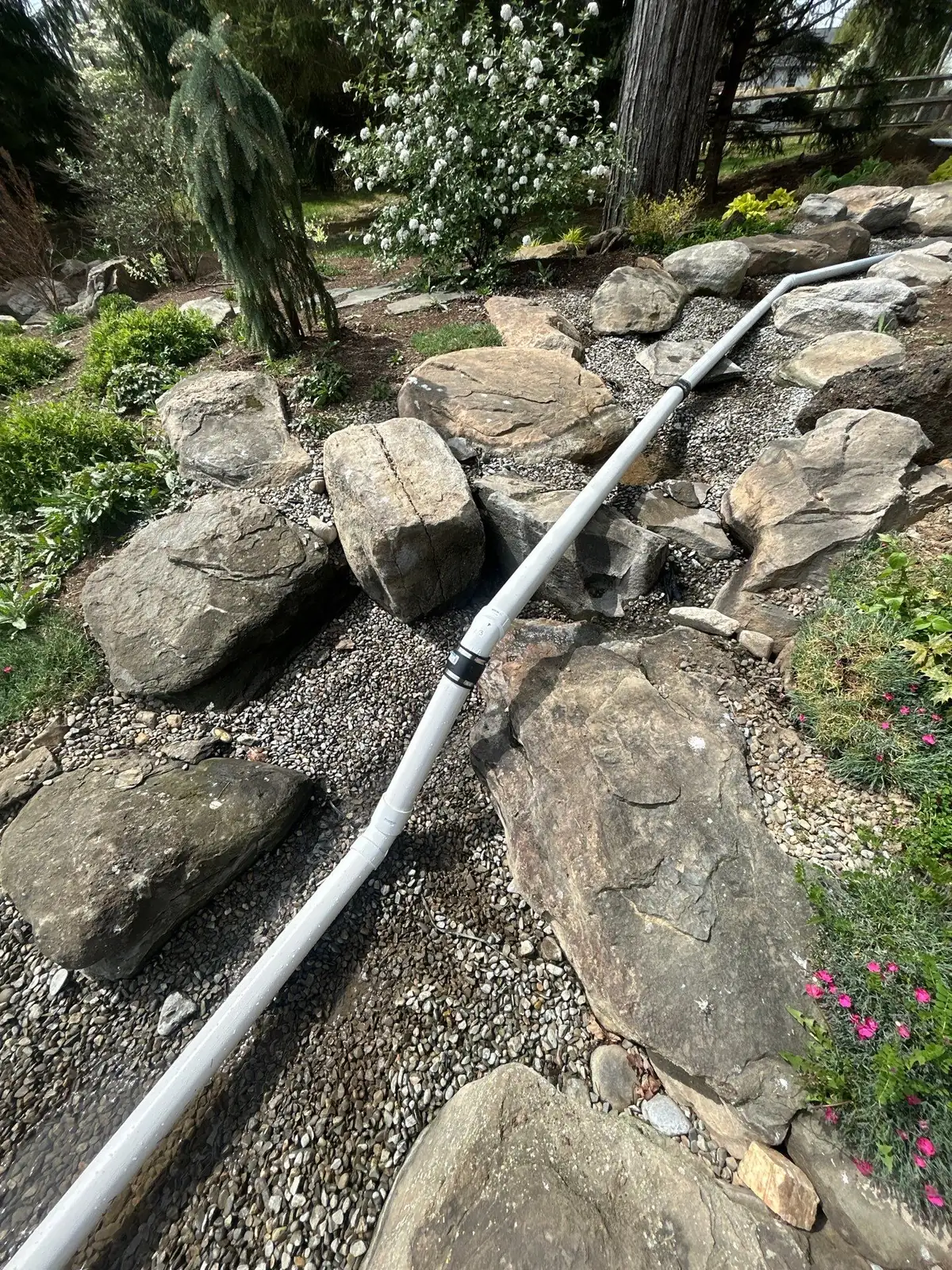
If water drops mainly while the pump is running, the leak may be in the waterfall, stream, filter, plumbing, or return path. Water can escape behind stone, over a low edge, or through a connection that only leaks under pressure.
If water drops when the pump is off, the basin, liner, folds, penetrations, or edges may need attention. Fish safety matters, so pump-off testing should be done only when aeration and water temperature allow it.
Can a Low Edge Look Like a Liner Leak?
Yes. Settled stone, soil washout, roots, mulch buildup, and foot traffic can lower an edge until water silently leaves the pond. That can look like a puncture even though the liner may be intact.
A good diagnostic visit checks the visible waterline, low edges, waterfalls, wet soil, plumbing, and the basin instead of jumping straight to liner repair.
What Should Wilmington Homeowners Send Before Booking?
Share the service address, full-pond photos, waterfall or stream photos, skimmer and filter photos, wet spots, the amount of daily water loss, and whether the loss changes with the pump on.
If the pond also has green water, weak flow, or heavy debris, mention that too. Leak diagnostics and maintenance often overlap, but the first visit should focus on the condition that creates the biggest risk.