
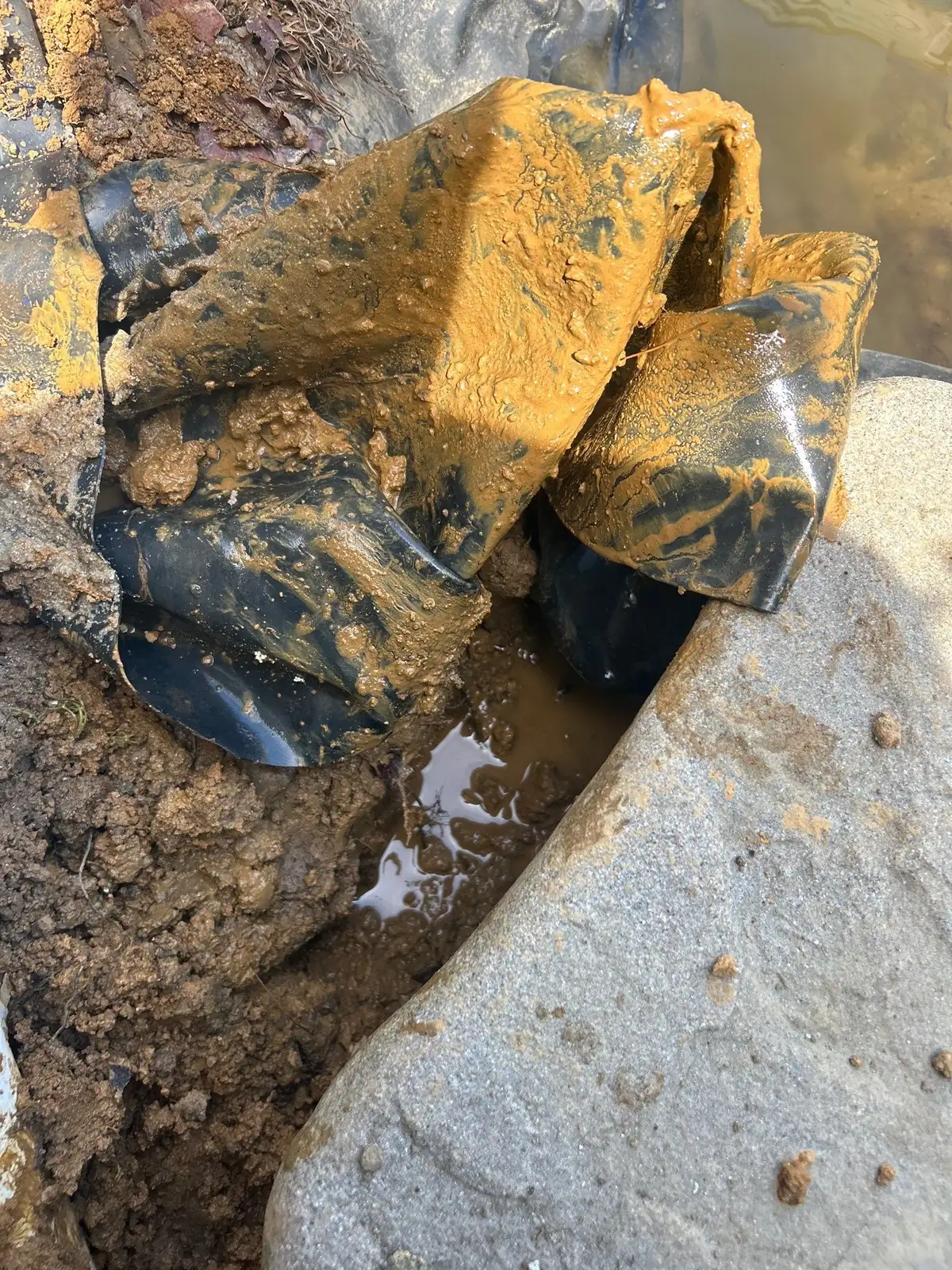
When a Wilmington pond keeps losing water, the best first step is measured observation. A clear record of water-level drop, pump status, wet soil, and waterfall behavior helps separate evaporation from a leak that needs diagnostics.
Start With a Simple Water-Level Record
Mark the pond level on a rock, skimmer face, or temporary tape line and check it again after 24 hours. Record whether the pump was running, whether rain fell, whether water was added, and how hot or windy the day was.
This matters because a pond with a waterfall can lose more water to splash and evaporation than a still basin. A sharp overnight drop or a repeated daily drop is more useful diagnostic information than a general guess that the pond seems low.
Look Closely at Edges Before Assuming the Liner Failed
Many leaks are not dramatic punctures. Settled stone, mulch buildup, root pressure, and low soil along the edge can let water escape quietly into planting beds. Wilmington landscapes with mature trees and older hardscape can hide this kind of low-edge loss.
A diagnostic visit should review the pond perimeter, waterfall return, stream edges, skimmer face, plumbing connections, and nearby wet areas before any repair path is recommended.
Pump Behavior Can Narrow the Search
Water loss that speeds up while the pump is on often points toward the waterfall, stream, filter, return plumbing, or splash path. Water loss that continues with the pump off can point toward the pond basin, liner folds, penetrations, or the waterline itself.
Do not leave pumps off if fish, water temperature, or oxygen levels make that unsafe. If testing could put fish at risk, note the symptoms and ask Rock Water Ponds how to proceed.
Maintenance and Leak Diagnostics Often Overlap
A pond can need maintenance and still have a leak. Heavy debris, weak flow, green water, or clogged filtration can make the system harder to read, while low water can expose pumps and stress fish. The first visit should focus on the condition that creates the most risk.
If the pond is losing water every day, start with leak diagnostics. If the water level is stable but the pond is cloudy, full of sludge, or struggling through summer heat, Wilmington pond maintenance may be the better first call.