
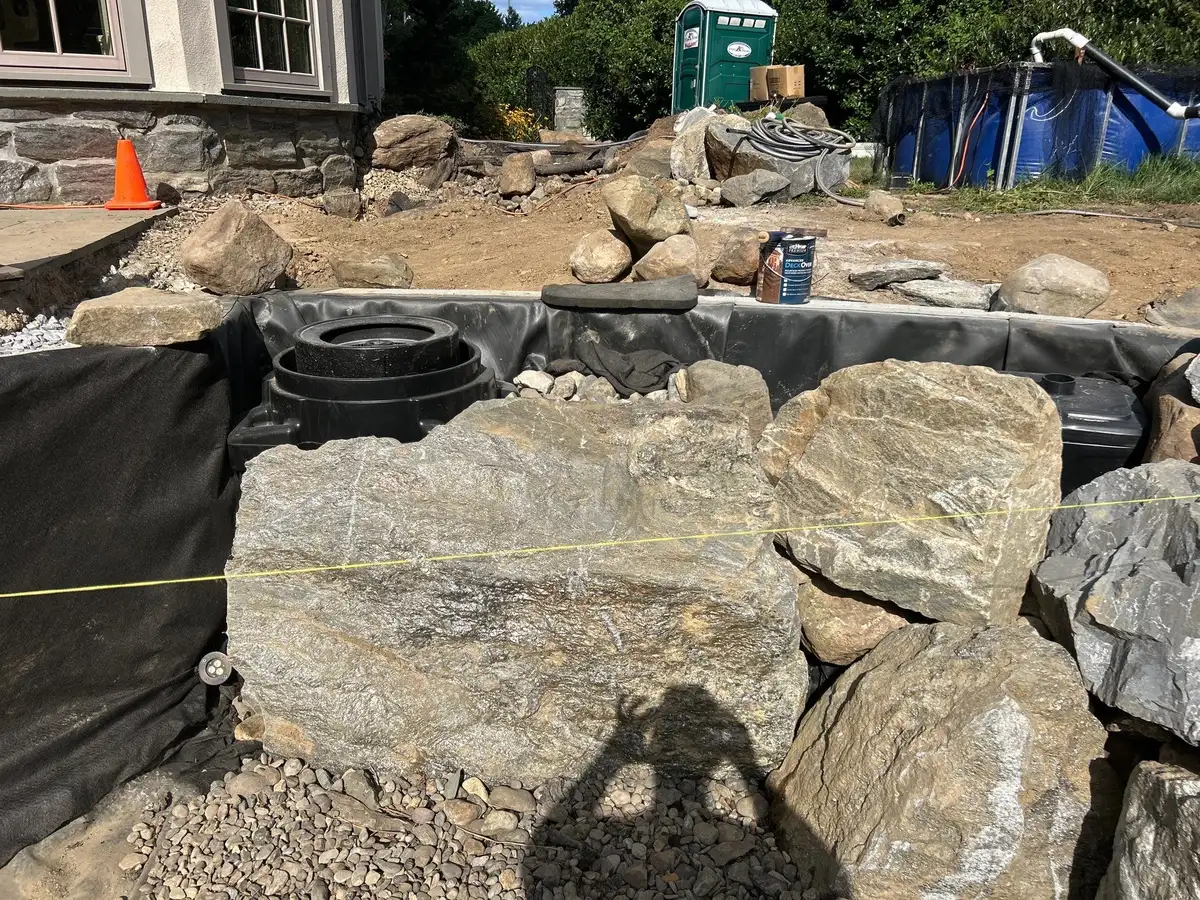
Wilmington homeowners usually call for pond maintenance after the pond starts showing a symptom: green water, string algae, clogged filters, low water, stressed fish, or too much debris. The better time to plan service is before those symptoms turn into a full cleanout, equipment repair, or fish-health problem. A pond is a working ecosystem, and the right service depends on the water, fish load, filtration, plants, and property conditions around it.
Rock Water Ponds provides pond maintenance in Wilmington, DE for homeowners who want clear answers before booking. Many Wilmington ponds sit near mature trees, patios, sloped yards, planting beds, and roof runoff. Those details affect how much debris reaches the water, how quickly filters clog, how algae grows, and whether a water-level issue is ordinary evaporation or a leak that needs diagnostics.
What Does Pond Maintenance Actually Include?
Useful pond maintenance is more than removing leaves from the surface. A service visit may include water quality review, skimmer basket cleaning, filter attention, pump flow checks, algae identification, plant trimming, fish observation, debris removal, and notes about seasonal timing. The exact scope depends on the pond. A small decorative feature without fish does not need the same rhythm as a koi pond with heavy feeding and warm summer water.
For Wilmington homes, access can matter as much as the pond itself. Narrow side yards, steps, older hardscape, tight parking, or steep grades can affect the equipment and time needed for service. If a cleanout might be needed, the crew may also need room for hoses, pumps, debris handling, and safe temporary fish holding.
Do I Need Maintenance or a Cleanout First?
Maintenance is usually the right fit when the pond is mostly working and the homeowner wants prevention. The pump runs, water moves through the feature, the fish appear stable, and the pond needs consistent care to stay ahead of algae, debris, and filter pressure.
A pond cleanout is often the better first step when leaves and sludge have been sitting for several seasons, the pond was inherited with the home, the water has odor or heavy cloudiness, or normal filtration has no chance to catch up. A cleanout gives the system a reset so recurring maintenance can hold better results afterward.
Why Does My Pond Keep Turning Green?
Green water usually points to a balance problem. Common causes include excess nutrients, too much sunlight, warm water, fish waste, decaying leaves, weak circulation, dirty filter media, an aging UV clarifier, or plant material breaking down in the pond. In Wilmington, hard summer heat and mature tree cover can make the problem show up quickly.
Maintenance can help when the cause is debris, filtration, plant balance, or inconsistent care. If runoff keeps carrying nutrients into the pond, the bottom is packed with sludge, or the filtration is undersized, the answer may include a cleanout, filtration review, or a ClearWater Guarantee conversation rather than another short-term algae treatment.
How Often Should a Wilmington Pond Be Serviced?
There is no honest one-size-fits-all schedule. Frequency depends on pond size, fish load, feeding, shade, tree cover, filtration, water movement, plant growth, and how much debris reaches the water. A koi pond under trees may need frequent active-season attention. A compact fountain with no fish and clean filtration may need a lighter schedule.
Recurring care is most valuable during spring startup, summer heat, fall leaf drop, and winter shutdown planning. Rock Water Ponds offers maintenance memberships for homeowners who want a scheduled service rhythm instead of waiting until the pond is already struggling.
Is Water Loss a Maintenance Problem?
Sometimes water loss is evaporation, splash from a waterfall, or a low edge letting water escape over the liner. Other times it is plumbing, a stream or waterfall leak, skimmer issue, or liner damage. If the pond is losing water steadily, the first conversation should include leak diagnostics, especially if the drop changes when the pump is running.
Before calling, mark the water level and note how far it drops over 24 hours. If fish are present, do not leave the pond without safe circulation or oxygen just to run a test. Photos of the waterfall, stream, pump, filter, skimmer, wet spots, and pond edge can help Rock Water Ponds decide whether maintenance or diagnostics should come first.
What Seasonal Issues Should Wilmington Homeowners Watch?
Spring is when filtration restarts, fish become more active, and old winter debris begins feeding algae. Summer heat lowers oxygen and increases pressure on filters. Fall leaf drop can fill skimmers and create sludge if the pond is not protected. Winter requires safe planning for pumps, plumbing, aeration, and gas exchange under ice.
Those seasonal changes are why pond care should be planned, not handled only when the water looks bad. For wooded properties, fall netting may protect the pond before leaves become a spring cleanout problem. For cold-weather planning, pond winter shutdown service can help protect equipment and fish.
How Should I Prepare Before Scheduling Service?
Have the Wilmington service address ready, then gather a few clear photos: the full pond, the skimmer, pump, filter, waterfall, access path, fish, water clarity, algae, wet ground, and any areas where debris collects. Share when the pond was last cleaned, whether the pump is running, whether fish are present, whether water is being added, and what changed recently.
You can request service through the contact page or call (484) 844-3863. If you are still comparing options, review the main pond maintenance service page, the Wilmington service-area page, and nearby pages for Greenville, Hockessin, and Newark.
The Best First Visit Starts With the Right Diagnosis
Pond maintenance works best when it matches the actual condition of the water feature. A healthy pond may need scheduled prevention. A neglected pond may need a cleanout. A water-loss issue may need diagnostics. A green-water problem may need better filtration, a cleanout, plant balancing, or recurring care. Rock Water Ponds helps Wilmington homeowners sort through those options before the pond becomes harder and more expensive to correct.