Pond and Water Feature Design
Rock Water Ponds designs and builds ponds, pondless waterfalls, fountainscapes, streams, and natural stone water features that fit the property instead of forcing a kit into the yard.

A successful water feature has to look natural, sound right, drain correctly, and remain serviceable after installation. Rock Water Ponds plans the basin, liner, pump, plumbing, electrical needs, filtration, overflow, planting areas, stone selection, and winter access before construction starts.
The right design may be a compact bubbling rock near an entry walk, a formal fountain for a patio, a pondless waterfall for sound without fish care, or a larger ecosystem pond with plants and filtration. Every choice changes excavation, pump sizing, energy use, maintenance, and winterization.
Moving water disappears into a hidden reservoir, giving homeowners the sound and look of a waterfall without an open pond basin or fish-care routine.
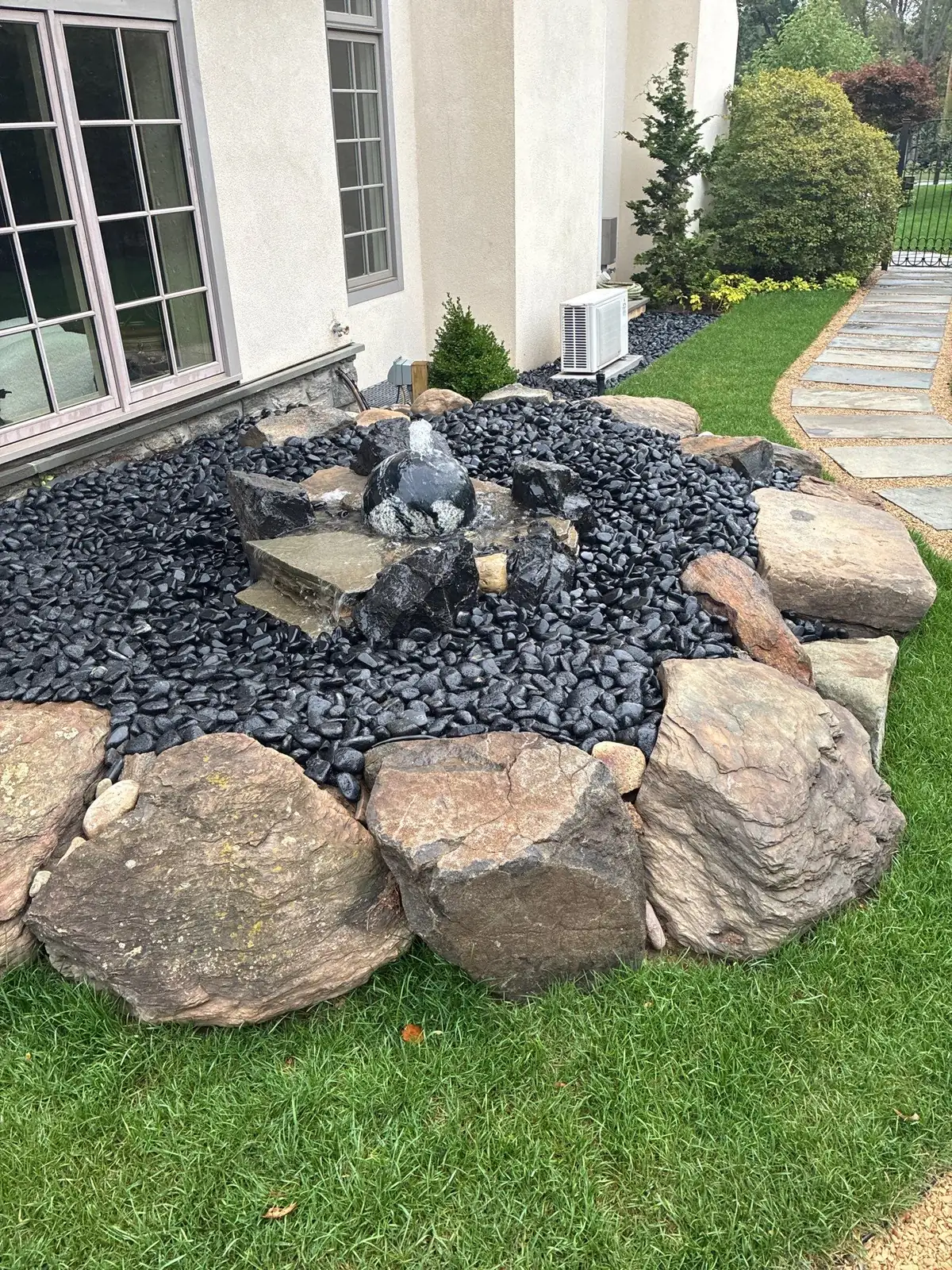
Compact fountains, urns, and bubbling stone features work well near patios, entries, courtyards, and smaller garden rooms where space and access are limited.
Living ponds combine circulation, filtration, aquatic plants, stonework, fish habitat, and seasonal care for a more immersive backyard water feature.
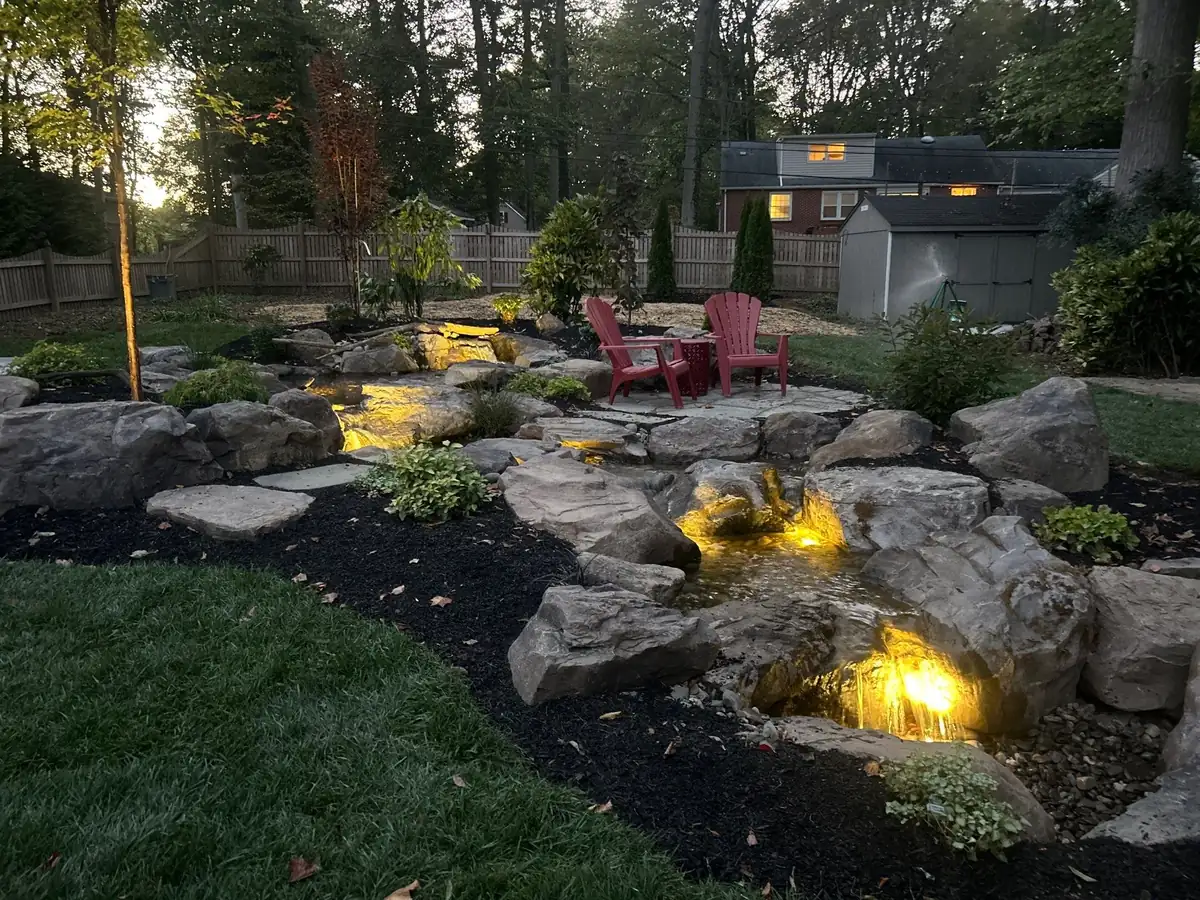
Recirculating streams connect grades, soften slopes, and bring movement through a garden when the property has enough length and elevation change.
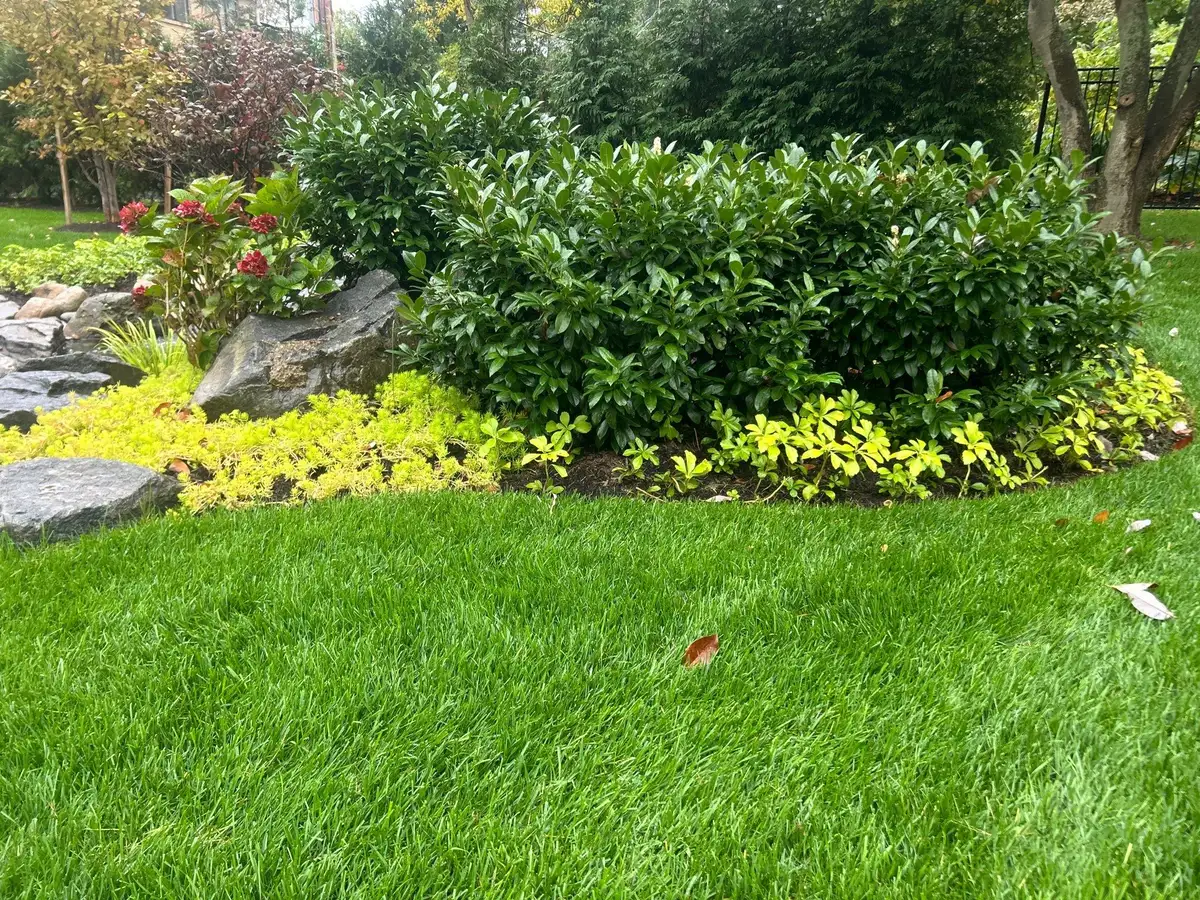
Integrated lighting, boulder placement, gravel texture, and planting pockets shape how the feature looks during the day and after dark.
On some properties, grade, runoff, and wet areas influence whether a decorative feature should also address drainage and overflow control.
The first conversation should cover how you want to use the space, what you want to hear from the water, whether fish or plants are part of the plan, where utilities and access are located, and how much maintenance you want to take on. Rock Water Ponds then matches the feature type to the yard rather than selling the same layout for every property.
Construction planning also matters after the feature is finished. Pump vaults, filters, valves, lighting transformers, low spots, overflow paths, and winter shutdown access all need to be reachable. A water feature that cannot be serviced becomes frustrating long before the stonework wears out.

The same feature can behave very differently from one property to the next, so the details around the water matter as much as the visible stonework.
A slope can make a waterfall feel natural, but it also affects excavation, basin depth, liner protection, overflow, and how stormwater moves around the feature during heavy rain.
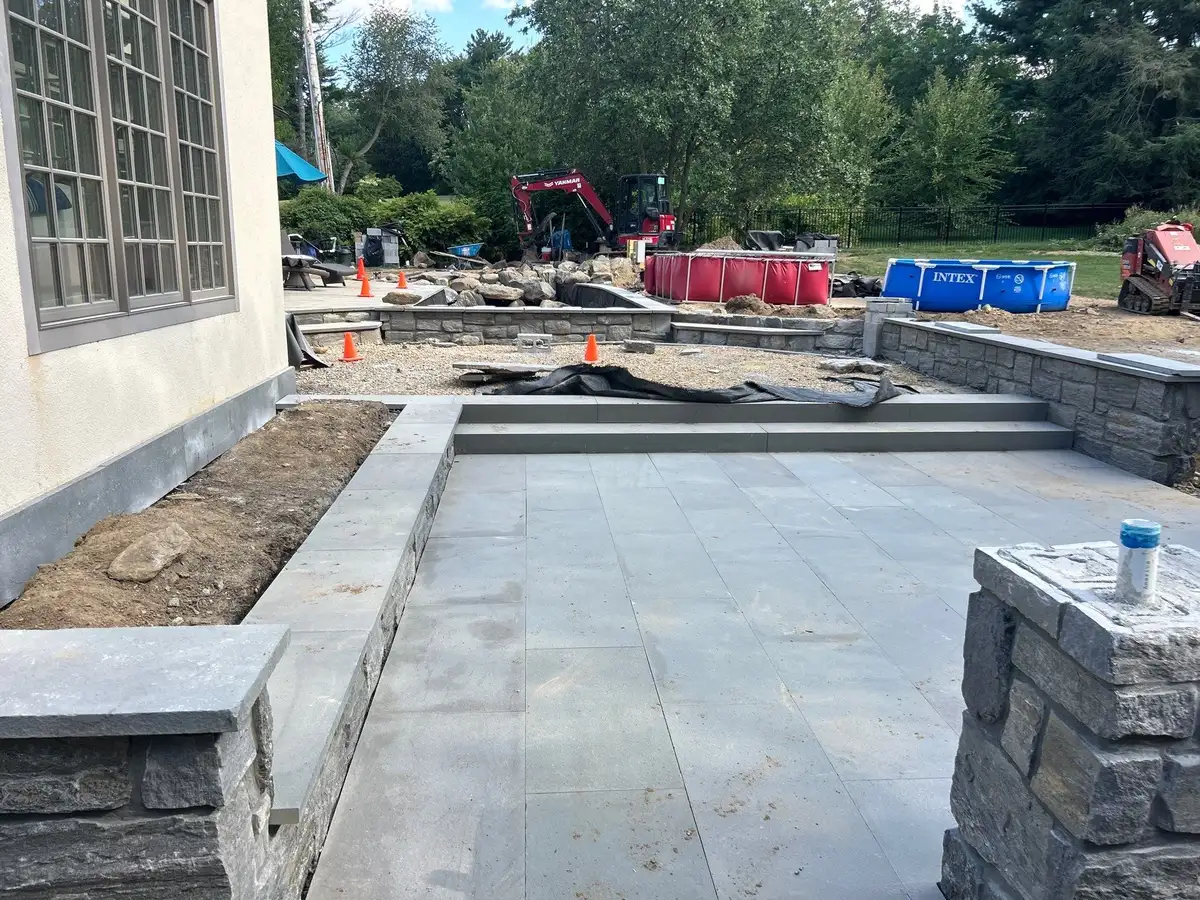
Boulder size, machinery access, soil conditions, and nearby patios or plantings all influence how the feature can be built without damaging the rest of the property.
The best feature is planned from where people will experience it: kitchen windows, patio seating, outdoor dining areas, entry walks, and the path through the garden.
A fish pond, pondless waterfall, and fountainscape each have different cleaning, plant, filter, and winterization needs. The design should match the level of care the homeowner wants long term.

Water feature design should account for what happens after the first season. Leaves will fall, plants will grow, pumps will need service, filters will need cleaning, and cold weather will arrive. Rock Water Ponds builds those maintenance realities into the layout so the feature remains usable and attractive.
For pond systems, that may include biological filtration, skimmers, plant zones, fish-safe depth, oxygen planning, and membership maintenance. For pondless waterfalls and fountains, the emphasis may be basin access, pump vault sizing, splash control, and easy winter shutdown.
Pondless waterfalls, bubbling rocks, and fountain features usually require less care than fish ponds because there is no visible pond ecosystem to balance. They still need seasonal cleaning, pump checks, and winter planning.
Often, yes. The best option depends on access, electrical service, drainage, grade, and whether the feature will be a compact fountain, a bubbling rock, or a larger pondless waterfall.
Many Delaware Valley water features need winter shutdowns or cold-weather adjustments to protect pumps, plumbing, basins, and decorative stonework from freeze damage.
Tell Rock Water Ponds what you want the water feature to do: create sound, add evening interest, support fish, solve a grade change, or become the center of an outdoor living space.