
The level drops with circulation off
Loss that continues when the pump, stream, and waterfall are inactive can shift attention toward the pond basin, liner, skimmer opening, bottom fittings, or a low perimeter edge.
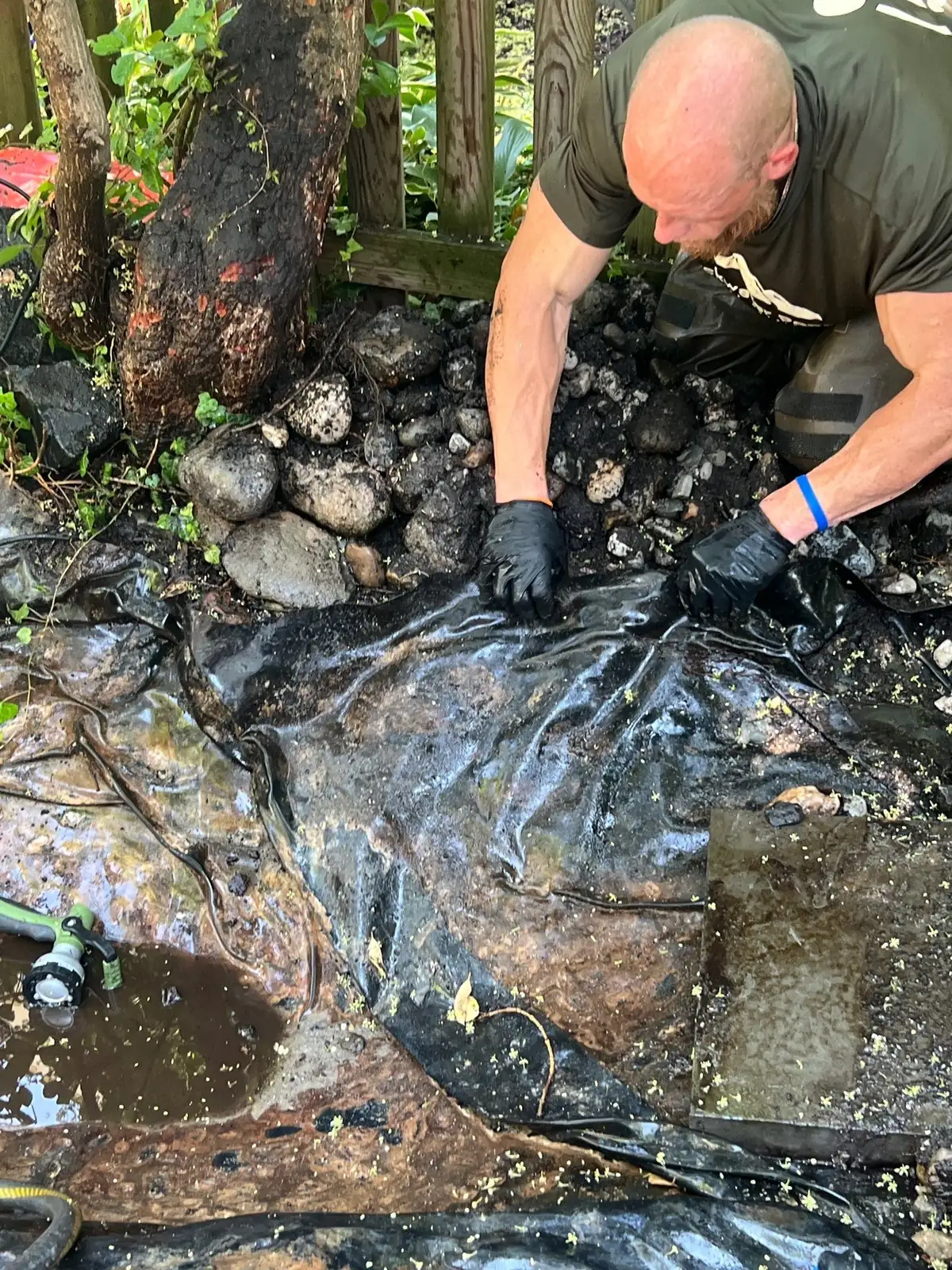
Systematic testing for a pond, stream, or waterfall that needs frequent top-offs, leaves wet ground, or loses water faster when circulation is running.
A falling water level does not identify its own cause. On Greenville properties, mature trees, stonework, sloped beds, and long waterfall runs can hide low liner edges, wet pockets, or diverted flow. Hard rain can add runoff and overflow clues that look related but need to be separated from repeatable water loss.
Rock Water Ponds approaches leak diagnostics by narrowing the system into testable zones. The goal is to determine whether the loss follows the basin, an edge, a skimmer or plumbing connection, or the active stream and waterfall. That evidence defines the next step and avoids opening finished landscaping without a reason.
The company backs its leak diagnostic work with a 100% leak detection guarantee. For a broader look at the service, visit the pond leak diagnostics page.
These observations do not diagnose the leak by themselves. They help direct testing toward the part of the system most likely to be involved.
Loss that continues when the pump, stream, and waterfall are inactive can shift attention toward the pond basin, liner, skimmer opening, bottom fittings, or a low perimeter edge.
A faster drop while the system runs can point toward plumbing, connections, the waterfall, a streambed, splash, or water being redirected beyond the liner.
A consistent stopping point can provide a useful elevation clue. The full perimeter and components at that height still need inspection before deciding where to repair.
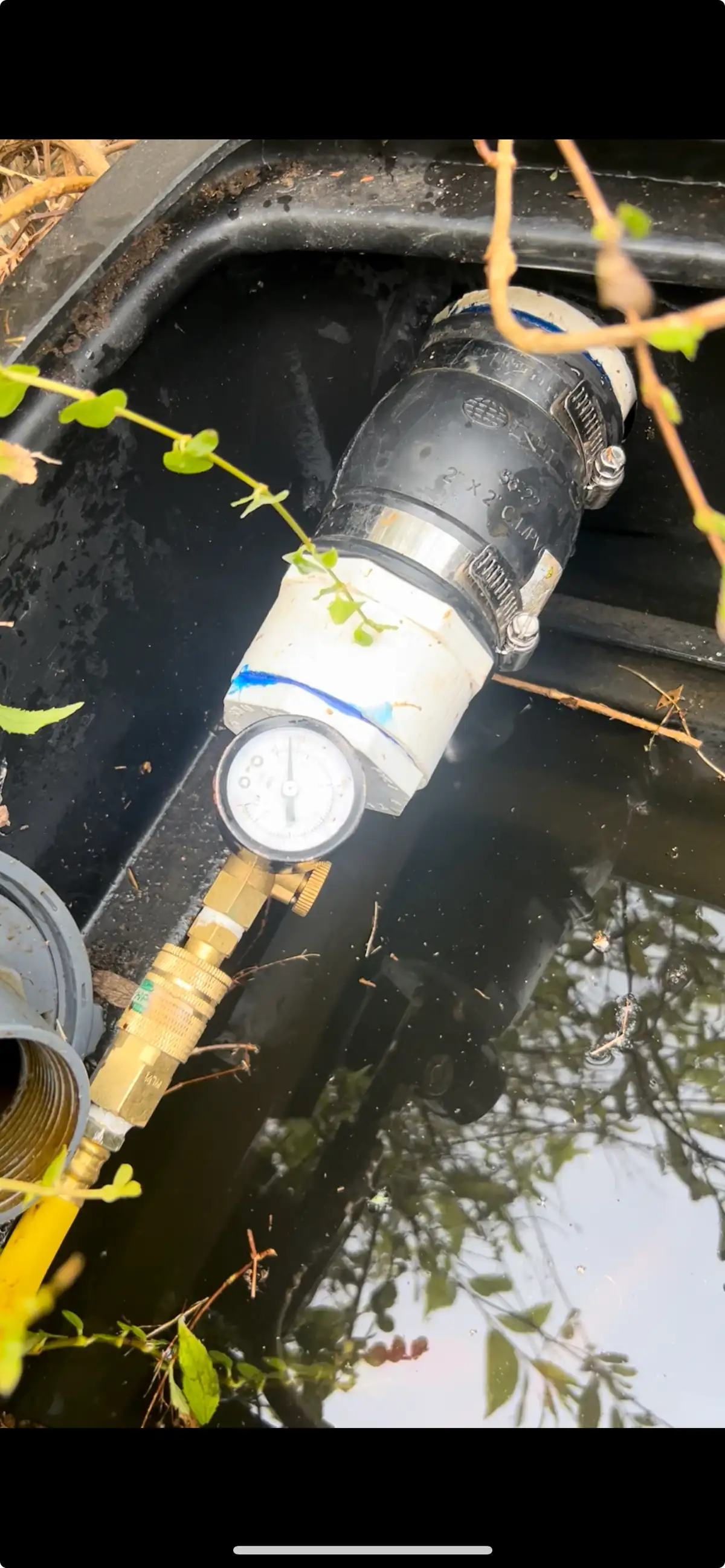
Review top-off frequency, recent weather, pump status, where the level settles, and whether wet ground appears at the same time.
Look at the pond perimeter, stone and liner edges, skimmer, waterfall and stream, visible plumbing, fittings, and areas changed by settling or landscape work.
Controlled testing narrows whether water is leaving through the basin or only while it travels through the active circulation system.
Once the source is located, repair scope can be explained around the affected component, access, and the work needed to restore the system.
Greenville’s wooded properties and layered landscapes can make water movement difficult to read at a glance. The important distinction is whether the site is sending water toward the pond, the pond is sending water into the landscape, or both conditions are present.
Allow temporary pond rise and surface runoff to settle, then continue tracking the water level. Muddy inflow and drainage issues call for different work than a leaking liner or pipe.
Look for consistently damp soil below the pond, stream, or waterfall rather than one wet area immediately after a storm or irrigation cycle.
Settling, shifted stone, and vegetation can conceal a low edge or redirect moving water. The visible wet spot may not be the point where water first left the system.
Diagnostic pricing depends on the water feature’s size and complexity, access to the pond and equipment, the number of pumps and plumbing runs, the speed of the loss, and how much isolation testing is required. A compact pond with one waterfall presents a different investigation from a long stream system with buried plumbing and multiple returns.
Repair pricing is separate because the right repair is not known until the source is found. A low edge, loose fitting, liner puncture, and underground plumbing failure do not have the same access, materials, or labor requirements.
Rock Water Ponds serves Greenville and nearby communities across northern New Castle County. Use these local pages to compare related service paths, or view the full service area.
Look for a repeatable drop in the water level, frequent top-offs, newly wet ground, or faster loss while the pump and waterfall are running. Weather, splash, and evaporation can change water levels, so a short written record of the level, rainfall, and pump status is more useful than one observation.
The diagnostic starts with the pattern of water loss and an inspection of the visible pond system. Testing then isolates likely zones such as the basin, skimmer, plumbing, waterfall, stream, or perimeter edges so the repair can be based on evidence rather than guesswork.
There is no single price for every pond. Diagnostic cost depends on the size and complexity of the water feature, access, the number of pumps and plumbing runs, how quickly the loss occurs, and how much isolation testing is needed. Repair work is scoped after the source is identified.
Heavy rain can temporarily raise the pond, wash sediment toward an edge, or reveal drainage and overflow issues. It does not by itself explain a repeated falling water level after conditions settle. Tracking rainfall alongside water loss helps separate a drainage concern from a pond-system leak.
Keep enough water in the pond for safe equipment operation and fish care, but record how much and how often you add water. Repeated top-offs can hide the rate of loss, so share that record when requesting diagnostics.
Note when the loss began, where the water level stops, whether the loss changes with the pump on or off, any recent work or settling, newly wet areas, and how often you add water. Photos of the pond, equipment, and wet areas can also help describe the system before the visit.
Tell Rock Water Ponds what the water level is doing, how often you add water, and whether the loss changes when the pump or waterfall is running.