
Restore flow and establish a baseline
Winter debris, plant dieback, pump performance, and filter condition help determine whether a startup visit is enough or deeper cleaning is needed.

Keep your pond clear, moving, and easier to enjoy with care shaped around its filtration, fish, plants, tree cover, and seasonal debris—not a one-size-fits-all checklist.
Rock Water Ponds is based in Hockessin and serves Newark and nearby northern Delaware communities.
When flow slows, the water changes color, leaves keep collecting, or fish behave differently, the useful question is not simply whether your Newark pond needs “cleaning.” It is what has changed in the pond system and which service addresses it.
Routine maintenance can support water clarity, debris control, accessible filtration, circulation, aquatic plants, and seasonal transitions. If heavy bottom buildup or persistent water loss is driving the problem, a pond cleanout or leak diagnostic visit may be the better first step.
Rock Water Ponds looks at the pond you have, including fish load, shade, surrounding landscaping, equipment access, and recent changes, before recommending a scope. That gives you a practical starting point whether you need one focused visit or recurring care.
In a yard with mature trees, sunny water, or sloped beds, debris and runoff can change quickly from one season to the next. Maintenance should follow what is happening now.
Winter debris, plant dieback, pump performance, and filter condition help determine whether a startup visit is enough or deeper cleaning is needed.
Warm water, sunlight, plant growth, fish activity, and restricted circulation can change clarity and the pond's available oxygen.
Skimmer loads can rise quickly under tree cover. Timely debris removal or fall netting can reduce what settles into the pond.
Pump operation, aeration, feeding, plants, and fish all need decisions suited to the pond rather than a blanket shutdown rule.
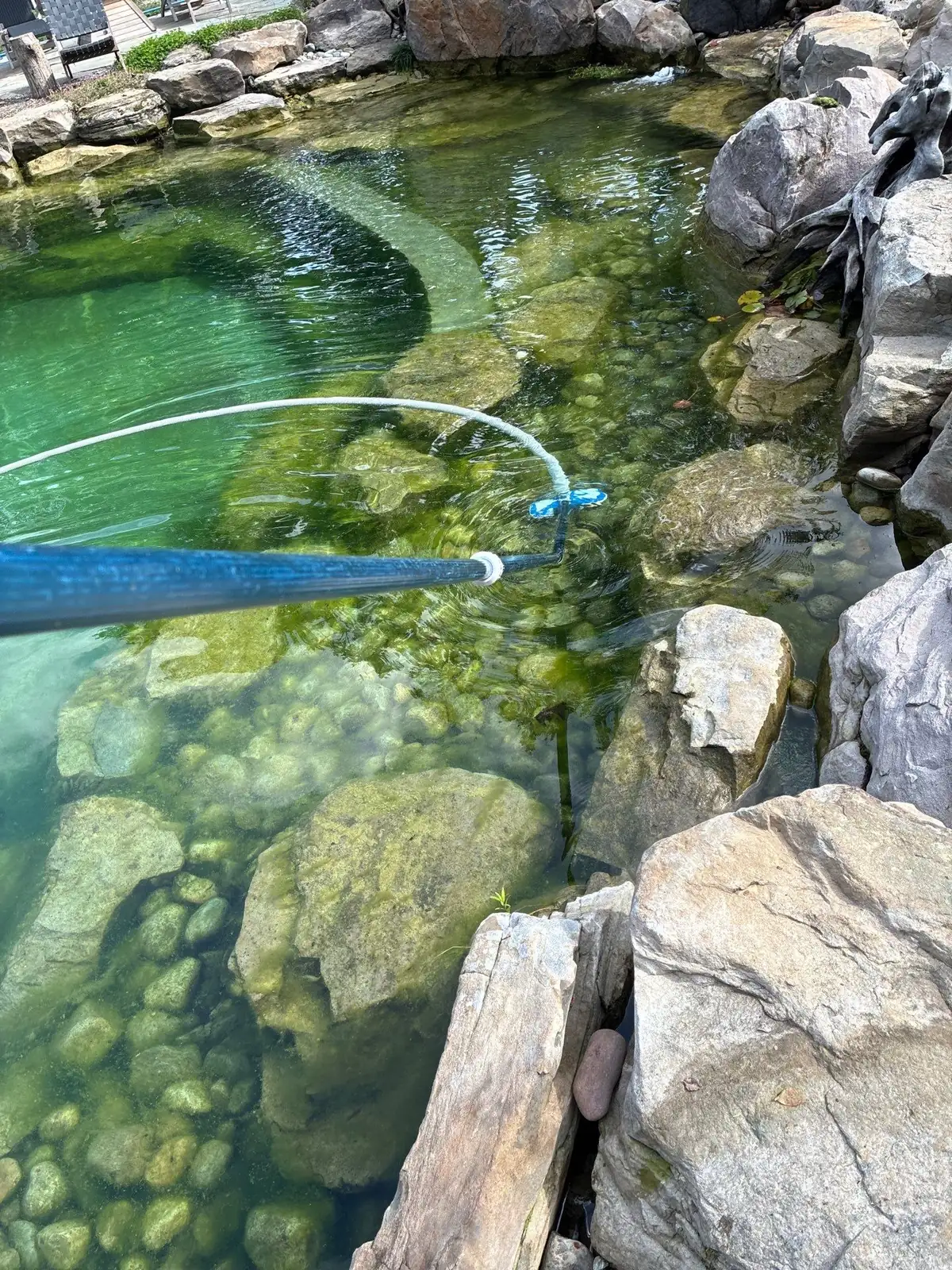
Every pond is different, and not every task belongs in every visit. Depending on the season and agreed scope, maintenance may include the following:
Review clarity, visible algae, water level, pump flow, waterfall return, and areas where water movement appears weak.
Check skimmer baskets, accessible filter components, and visible equipment condition for buildup or reduced performance.
Address reachable debris, plant overgrowth, seasonal trimming needs, and organic material that may be settling into the pond.
Note fish behavior and visible stress clues while considering water temperature, flow, shade, and the pond's stocking level.
Size and depth, access, fish load, filtration, debris or sludge, equipment condition, visit frequency, and time since the last service all shape the scope. A stable pond needing routine care is a different job from a neglected pond that first needs a cleanout or correction.
Starting with the correct service protects your time and keeps a clarity problem from masking deeper buildup, equipment trouble, or water loss.
For a serviceable pond that needs recurring debris control, filter attention, plant care, equipment observation, and seasonal adjustments.
View pond maintenanceFor deep organic material, persistent odor, long-deferred care, or conditions that routine maintenance cannot reasonably reset.
View pond cleanoutsFor a level that keeps falling, a new wet area, or water loss that changes when the pump or waterfall is running.
View leak diagnosticsA pond can look acceptable while a pump, intake, filter, or return is already losing performance. That is why routine observation should include both the water and the accessible equipment supporting it.
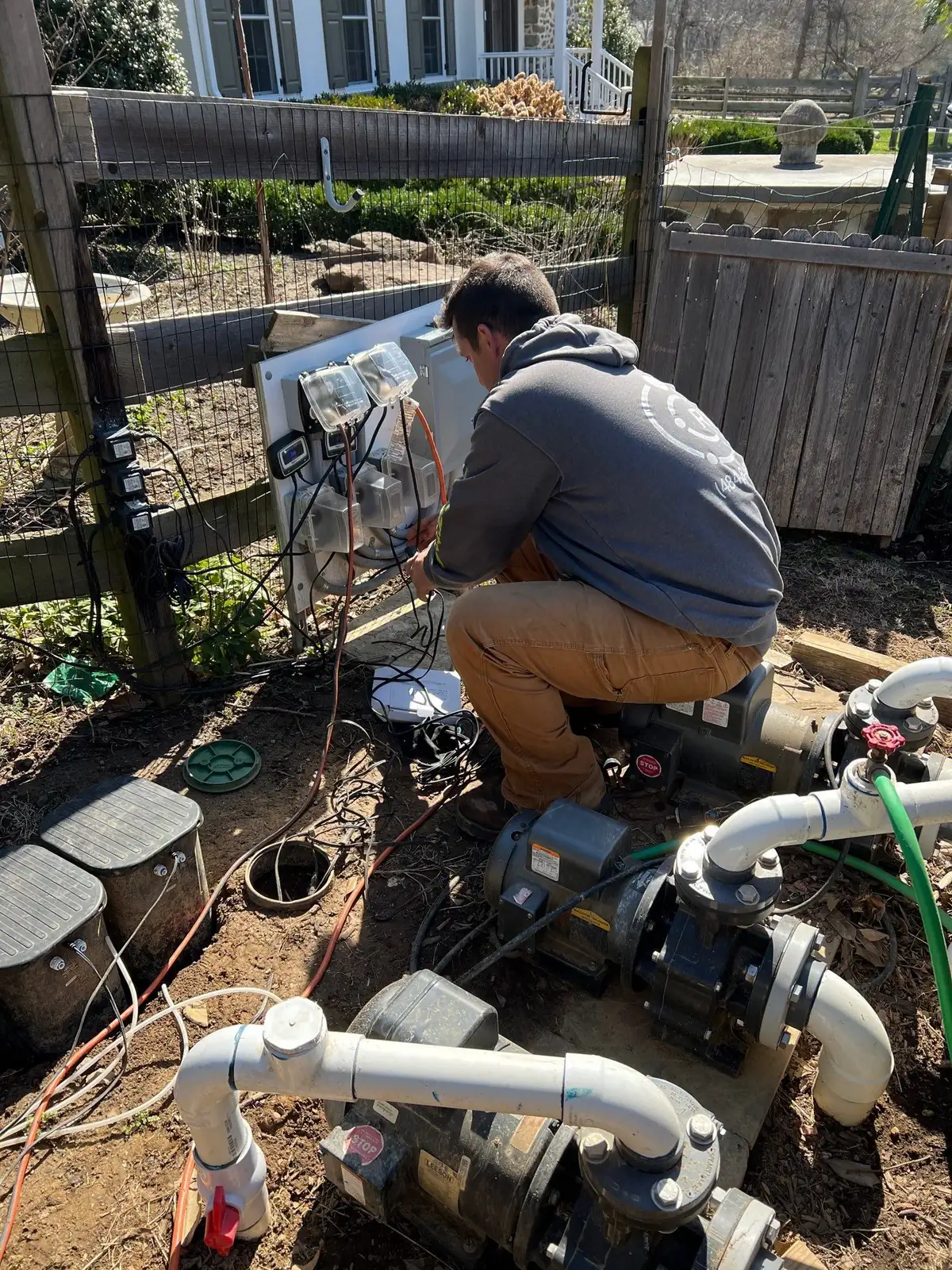
For an inherited pond or a system with an unclear service history, the first visit can establish what equipment is present, how water returns to the pond, where debris is collecting, and which changes deserve attention. Electrical work, major repairs, and equipment replacement require their own agreed scope.
If the water level is the main concern, note whether the loss is faster with the pump running and whether damp ground appears near the stream, waterfall, plumbing, or pond edge. Those details can help distinguish maintenance needs from a water-loss investigation.
Rock Water Ponds serves Newark from its Hockessin base and provides pond care across nearby northern Delaware communities. Find service for your area below, or view every community in our service area.
The scope depends on the pond, season, and current condition. A maintenance visit may include checking water level and clarity, pump flow, accessible filters and skimmers, algae, aquatic plant growth, fish behavior, debris, and visible edge or equipment concerns. Repairs, full cleanouts, and leak diagnostics are separate when the pond needs more than routine care.
There is no single schedule for every pond. Pond size, shade, fish load, filtration, surrounding trees, and the season all matter. A pond with heavy leaf drop or a high fish load may need more frequent attention than a small, lightly stocked water garden.
Cost depends on pond size and type, access, debris and sludge, fish load, filtration, equipment condition, visit frequency, and whether other work is needed first. Rock Water Ponds estimates the work around the actual pond and requested scope.
A well-functioning pond still needs observation and seasonal care, but it should not require constant guesswork. Regular debris removal, appropriate filtration and circulation, plant care, and attention to fish behavior make changing conditions easier to catch before they become larger problems.
Do not add material only as a quick response to cloudy water or algae. The right bottom treatment depends on how the pond was built, how water circulates, how debris is removed, and whether fish are present. Existing stone and gravel should be evaluated as part of the whole pond rather than treated as a stand-alone fix.
Heavy bottom buildup, persistent odor, or long-deferred care may point to a controlled pond cleanout. A water level that keeps dropping, a new wet area, or loss that changes when the waterfall runs may call for leak diagnostics. Routine maintenance is best suited to ongoing care when the pond is otherwise serviceable.
Tell us what you are seeing, whether fish are present, and how the water, flow, or debris has changed. Rock Water Ponds will help identify the right starting service.