
Waterfall Design Ideas for Your Backyard Pond: A Delaware Homeowner's Guide
A waterfall transforms a backyard pond from a static water feature into a living element of the landscape. The sound of moving water, the visual motion, the way light plays across a cascade at different times of day — these are the qualities that make pond owners describe their waterfall as the feature they enjoy most. Beyond aesthetics, waterfalls serve a practical function: they circulate and aerate the water, which directly supports fish health and reduces algae growth.
This guide explores the most effective waterfall design approaches for backyard ponds in Delaware and southeastern Pennsylvania, with specific attention to the stone types, elevation changes, and water volumes that work best in our region.
Why Waterfall Design Matters More Than Size
The most common misconception about pond waterfalls is that bigger is always better. In practice, a well-designed 3-foot waterfall with proper stone placement, natural-looking spillways, and appropriate water volume creates a more compelling feature than a 6-foot waterfall that looks obviously man-made or produces a disproportionate amount of noise for the yard.
Waterfall design success comes from three factors: proportionality with the pond and surrounding landscape, stone selection and placement that mimics natural formations, and water volume tuned to produce the right sound character for the space. A small courtyard pond in Wilmington needs a gentle cascade. A large property in Greenville or Kennett Square can support a dramatic multi-tier waterfall that becomes the focal point of the entire backyard.
Waterfall Styles for Delaware and SE Pennsylvania
Natural Boulder Cascade
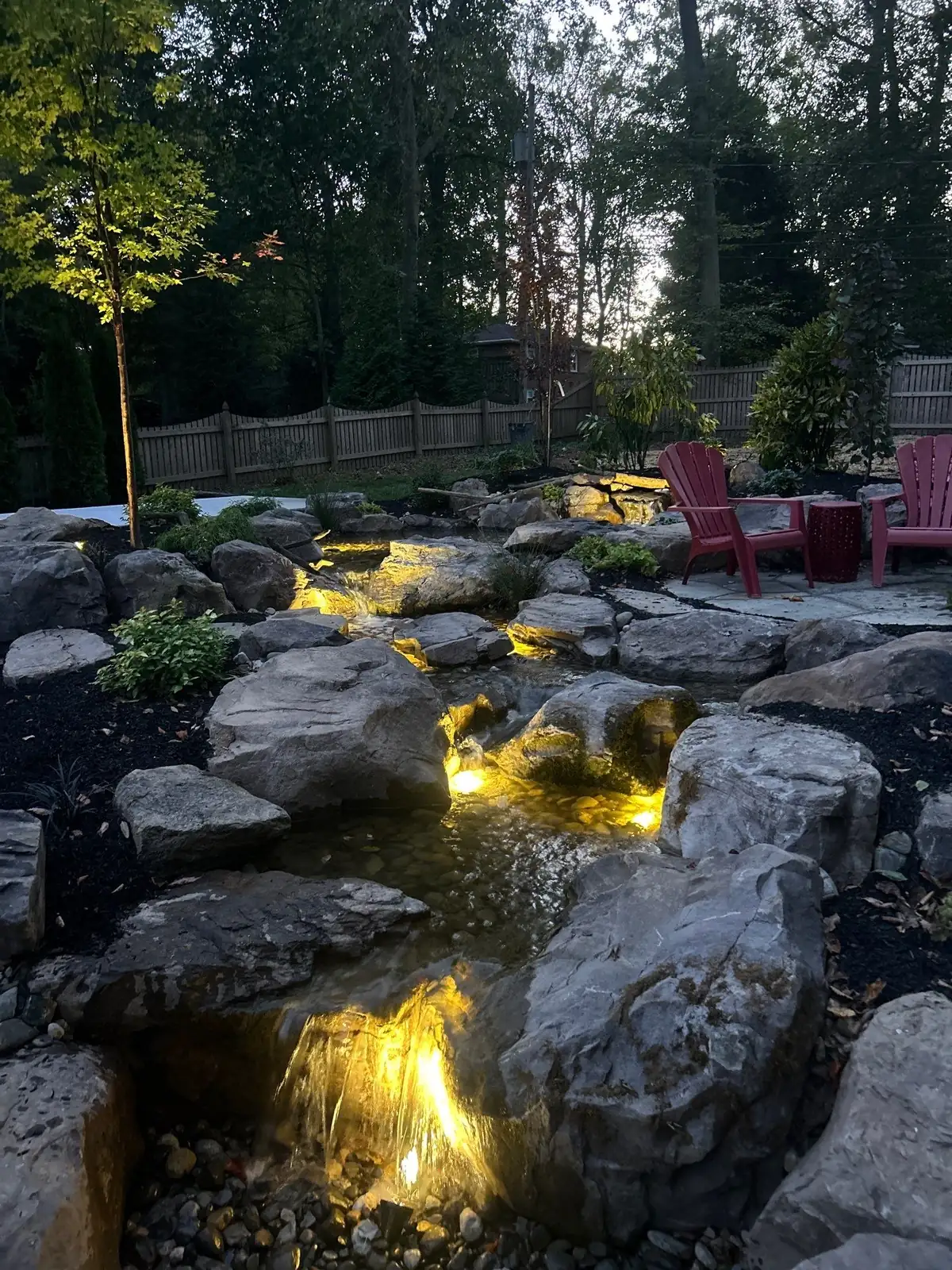
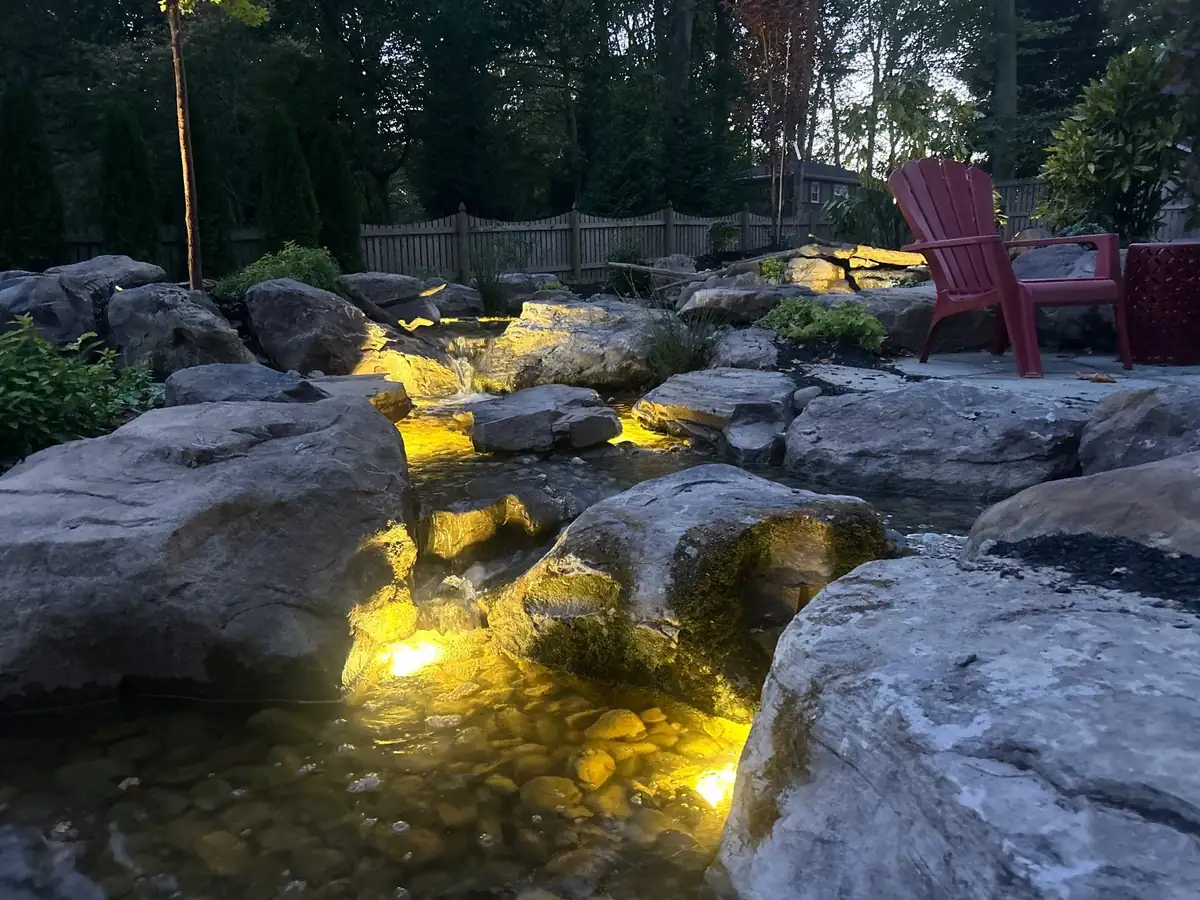
This is the most popular waterfall style in our region because it integrates naturally with the rolling terrain and wooded landscapes common in northern Delaware and Chester County. Natural boulder cascades use locally sourced or regionally appropriate stone arranged to look like a natural stream that terminates at the pond edge.
The key to a convincing natural cascade is stone placement. In nature, waterfalls form where water encounters a shelf of harder rock that resists erosion. Replicating this pattern means positioning flat, ledge-like stones at the spill points and rounder, weathered boulders along the sides. The water should fall over the front edge of each ledge rather than flowing evenly across the entire surface, which looks artificial.
Natural cascades work particularly well on properties that have existing grade changes. If your yard slopes down toward the pond location, the grade provides natural elevation for the waterfall without requiring imported fill or a raised berm. Many properties in Hockessin, Pike Creek, and Chadds Ford have enough natural grade to support a 2- to 4-foot waterfall without significant earthwork.
Stream and Waterfall Combination
Rather than a single vertical drop, a stream-and-waterfall design creates a running brook that flows through the landscape before dropping into the pond. The stream may wind 10 to 30 feet through the yard, creating multiple small drops and pools before reaching the main pond. This design maximizes the sound of moving water throughout the landscape and creates additional planting opportunities along the stream banks.
Stream-and-waterfall combinations require more liner, more stone, and more plumbing than a standalone waterfall, but they dramatically increase the visual and auditory impact. They also increase the total water surface area exposed to air, which improves aeration (see our aeration guide for why this matters for fish health).
This design is ideal for larger properties in Greenville, Montchanin, and Kennett Square where the yard provides 20 or more feet of run between the pump location and the pond.
Formal Spillway
A formal spillway uses cut or dressed stone to create a clean, geometric water feature. Instead of the random placement of a natural cascade, a formal spillway produces a uniform curtain of water from a flat stone ledge or a fabricated weir. This style works well with contemporary architecture and when the pond is part of a structured landscape design with defined edges and geometric planting beds.
Formal spillways are less common in our region than natural cascades, but they are effective when the house and surrounding hardscape have clean, modern lines. A natural boulder waterfall next to a contemporary house creates a visual disconnect; a formal spillway maintains design consistency.
Pondless Waterfall
A pondless waterfall uses a hidden underground reservoir instead of a visible pond. Water cascades over rocks and disappears into a gravel basin, where a pump recirculates it back to the top. The result is the visual and auditory experience of a waterfall without the open water body.
Pondless waterfalls are ideal for homeowners who want the sound and motion of water but do not want the maintenance commitment of a fish pond, have small children and prefer to avoid open water, or have a yard that does not have room for a full pond and waterfall combination. They also work well as standalone features in front yards, courtyard gardens, or commercial landscaping.
Stone Selection for Delaware Waterfalls
The stone you choose sets the character of the entire waterfall. In Delaware and southeastern Pennsylvania, the most natural-looking waterfalls use stone that could plausibly be found in the local geology.
Pennsylvania Fieldstone
The most authentic choice for our region. Pennsylvania fieldstone is the same stone that appears in old farmhouse foundations, historic walls, and natural outcroppings throughout Chester County and northern Delaware. It ranges from flat, stackable pieces ideal for ledge construction to rounded, weathered boulders for stream banks. The color palette (grays, tans, and warm browns) blends with the existing landscape year-round.
Moss Rock
Moss rock is fieldstone or limestone that has naturally developed a coating of moss and lichen. Using moss rock in a new waterfall installation makes the feature look established from day one rather than obviously new. The biological coating also integrates with aquatic and marginal plantings to create a cohesive ecosystem appearance.
Weathered Granite
Granite is harder and more angular than fieldstone, which creates a different visual character — more mountainous and dramatic. Weathered granite works well in larger waterfall installations where the scale calls for more imposing stone. It is also extremely durable and resists frost damage through Delaware's freeze-thaw cycles better than softer stone types.
Engineering Considerations
Pump Sizing
The pump is the engine of the waterfall. Undersizing the pump produces a trickle that looks anemic; oversizing creates a torrent that erodes the stone placement and overwhelms the pond. The standard guideline is 1,500 gallons per hour for every foot of spillway width. A 2-foot-wide spillway needs approximately 3,000 GPH at the head height of the waterfall.
Head height matters because every foot of elevation between the pump and the top of the waterfall reduces the pump's output. A pump rated at 5,000 GPH at zero head might produce only 3,000 GPH at 5 feet of head. Always size the pump based on flow at the actual head height, not the zero-head specification.
Liner and Sealing
The waterfall uses the same EPDM rubber liner that lines the pond, extended up and over the waterfall structure. Every stone sits on top of the liner, not beside it, which means the liner must be installed before any stone placement begins. Seam sealing between the waterfall liner and the pond liner is critical because even a small leak at the junction will slowly drain the pond and compromise the pump.
A properly installed waterfall liner includes adequate overlap at all edges, foam sealant between stones and liner at the spillway edge, and a waterfall collection basin at the top that captures the pump output and distributes it evenly across the spillway. If your existing pond has a waterfall that loses water, leak diagnostics will identify whether the loss is at the spillway, the liner seam, or somewhere in the stream bed.
Flow Path Engineering
Water follows gravity, and it follows the path of least resistance. A waterfall designer's job is to ensure that both of those forces direct water exactly where it should go and nowhere else. Common flow problems in poorly designed waterfalls include water running behind the spillway stone instead of over it, splash escaping the stream channel and draining away from the pond, and water pooling in unintended areas of the rock formation, creating stagnant zones where algae and mosquitoes thrive.
Each stone in the waterfall is positioned to direct water forward and downward, with foam dams concealed behind the rocks to prevent backward migration. This invisible engineering is what separates a professional pond and waterfall installation from a DIY build that loses water every time the pump runs.
Adding a Waterfall to an Existing Pond
Many Delaware pond owners have a pond without a waterfall and want to add one. This is a common project, but it requires careful planning because the waterfall needs to integrate with the existing pond liner, the pump capacity may need to increase, and the added water circulation changes the pond's ecosystem dynamics.
The best approach is to extend the existing pond liner (or install a new liner section with a properly sealed overlap) to create the waterfall structure, add or upgrade the pump to handle the head height and desired flow rate, and build the waterfall rock formation so it looks like a natural extension of the existing pond edge rather than an obvious add-on.
If your pond was built more than 10 years ago, the existing liner may need repair or replacement at the junction point. A maintenance assessment before waterfall construction identifies any liner issues that should be addressed during the build rather than discovered afterward.
Get Your Waterfall Designed Right
Rock Water Ponds designs and installs custom waterfalls for backyard ponds across Delaware and southeastern Pennsylvania. Every waterfall starts with an on-site assessment where we evaluate the grade, the existing pond (if applicable), stone options, and the sound character you want to achieve. Our maintenance membership clients receive priority scheduling for waterfall additions and modifications.
Summer is the ideal time to plan and install a waterfall. The ground is workable, the landscaping can establish around the new feature before fall, and you get the full summer season to enjoy it.
Or call (484) 844-3863.