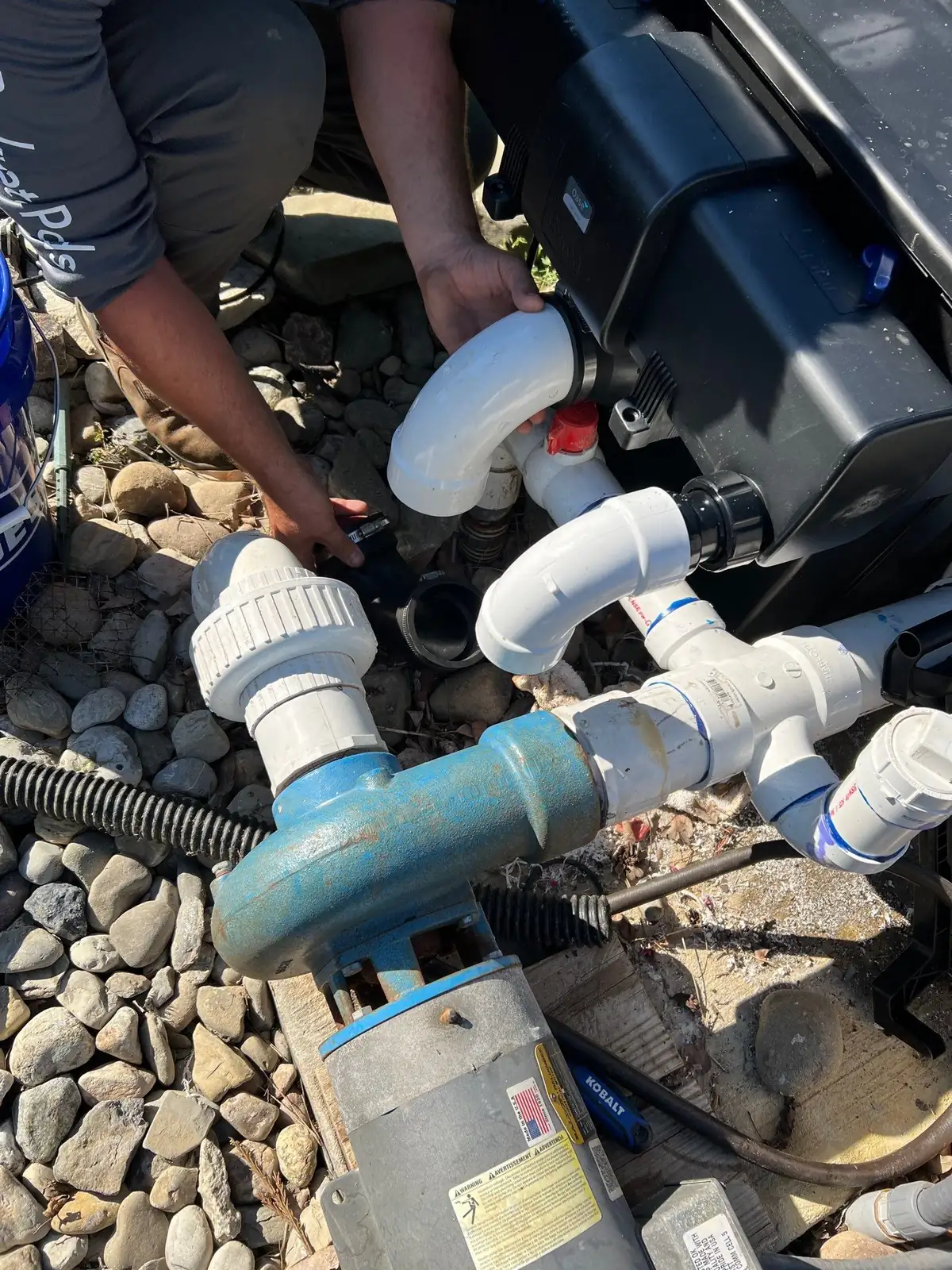
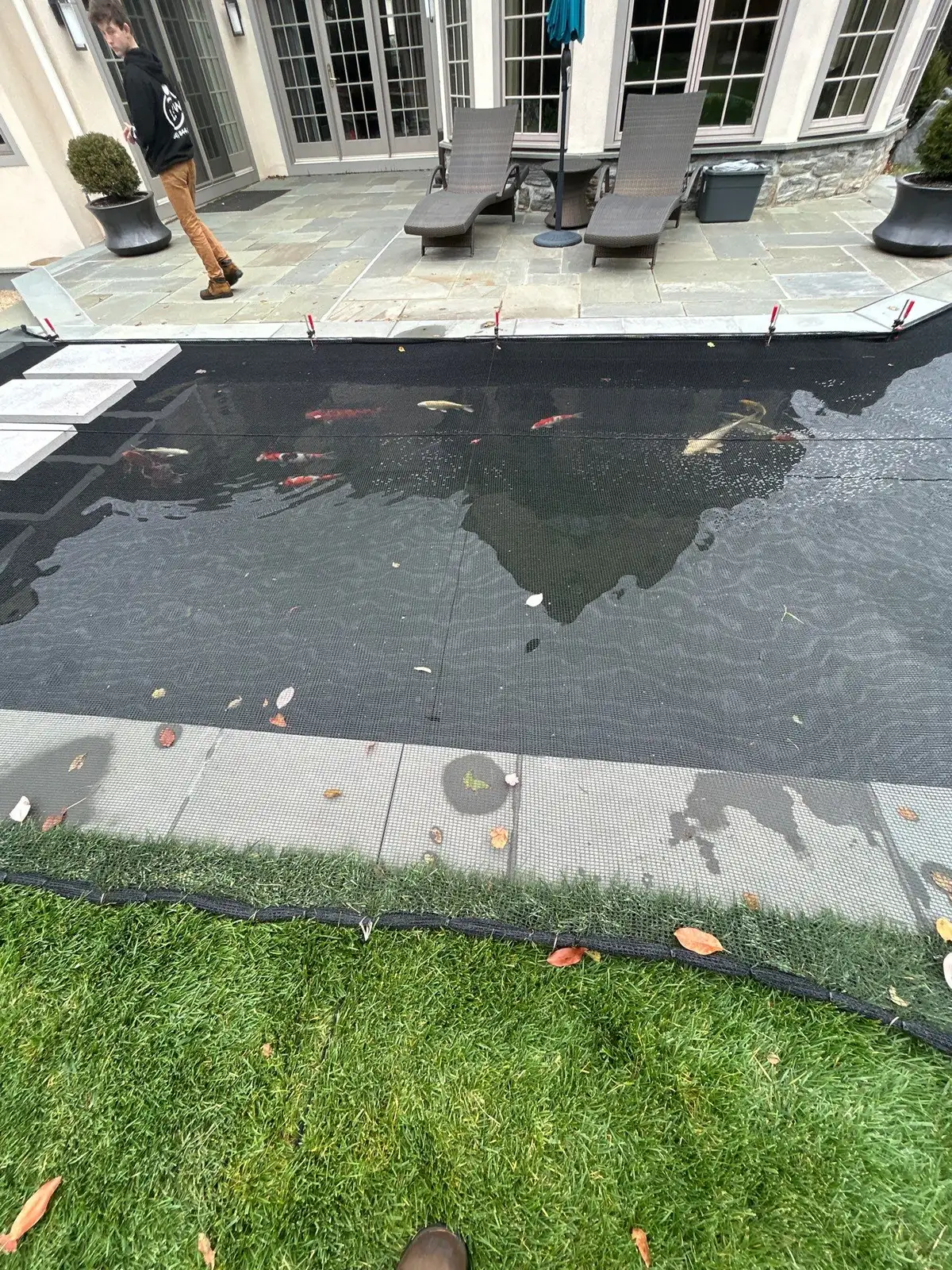
Pond winter shutdown service preparing water feature for freezing temperatures

Pond Winter Shutdown Services in Delaware

Proper pond winterization in Delaware protects pumps, filters, and aquatic life from freeze damage while preventing costly spring repairs. Rock Water Ponds handles the full shutdown so your water feature survives winter intact.

What Happens If You Don't Winterize Your Pond

Delaware winters bring freezing temperatures that can cause serious damage to unprotected water features. Here's what's at stake when pond winterization is skipped.

Pump damage: Water expands when it freezes. Pumps left in the pond with standing water in the volute can crack internally, destroying a $200-$1,500 pump overnight. Plumbing connections are equally vulnerable to freeze-crack failure.

Filter destruction: External filters, UV clarifiers, and biofalls with water trapped inside will crack when that water freezes. Replacing a complete filtration system runs $500-$3,000 depending on the setup.

Fish suffocation: When a pond freezes over completely, gas exchange stops. Decomposing organic material on the bottom continues producing toxic gases (hydrogen sulfide, carbon dioxide) that build up under the ice. Without an opening in the ice for gas exchange, fish can suffocate within days.

Liner stress: Ice formation puts pressure on liner surfaces, especially at edges and plumbing penetrations. Repeated freeze-thaw cycles can shift rocks, loosen plumbing connections, and create the conditions for spring leaks.

Professional winterization prevents all of these problems. It's one of the most cost-effective services we offer relative to the damage it prevents.

De-icer floating in frozen pond maintaining gas exchange opening

The Winter Shutdown Process

Rock Water Ponds follows a comprehensive winterization protocol that addresses every component of your water feature system.

Pump Removal & Storage

The main circulation pump is removed from the pond, drained completely, and stored in a frost-free location. Check valves are opened to drain plumbing lines. Any water trapped in pipes is blown out or drained to prevent freeze cracking. The pump is inspected and any wear issues are noted for spring service.

Filter Winterization

External filters, UV clarifiers, and biofalls are drained, cleaned, and winterized. Filter media is removed and stored or replaced as needed. All water is removed from filter housings and plumbing connections to prevent freeze damage. UV bulbs are stored safely and replaced if past their effective lifespan.

De-Icer Installation

A floating de-icer or pond heater is installed to maintain an opening in the ice surface throughout winter. This opening allows toxic gases to escape and fresh oxygen to enter, keeping fish safe through dormancy. We position the de-icer for optimal effectiveness and connect it to a GFCI-protected outlet.

Aeration Setup

A winter aerator is installed at a shallow depth (not the deepest point) to maintain gentle water movement and gas exchange without disrupting the warmer water layer where fish rest at the bottom. Proper aerator placement is critical: placing it too deep in winter actually chills the warmer bottom water and stresses fish.

Fish Preparation

Fish feeding is stopped when water temperatures drop below 50 degrees F, as fish metabolism slows and undigested food decays in their digestive systems. We assess fish health, check for parasites or injuries that need treatment before dormancy, and ensure the pond depth is adequate for overwintering (minimum 18-24 inches).

Final Debris Removal

All remaining leaf debris, dead plant material, and organic matter is removed from the pond before shutdown. This reduces the decomposition load that produces toxic gases under winter ice. If fall netting was used, the net structure is removed and the pond receives a final cleaning pass.

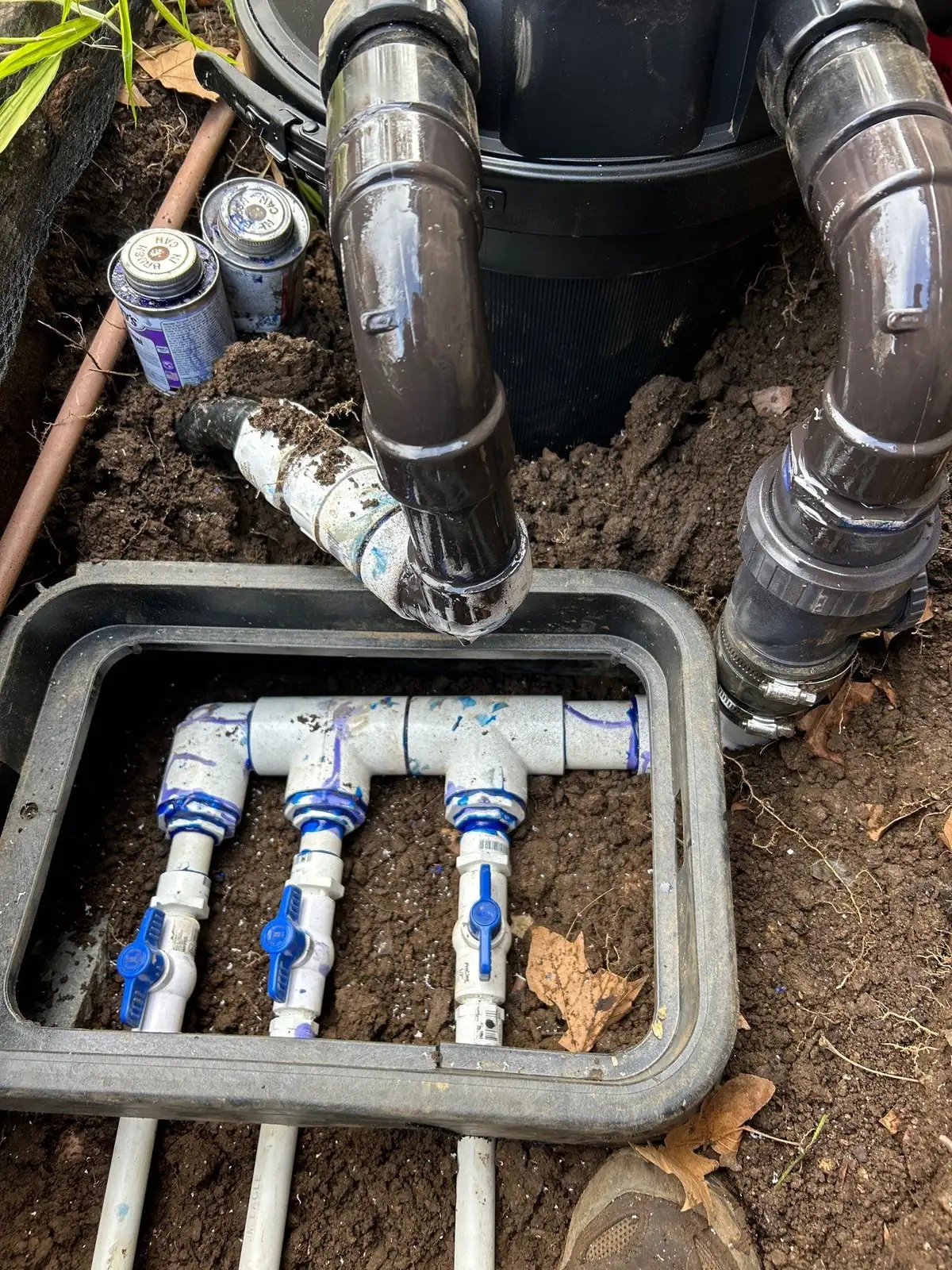
Spring pond restart with pump reinstallation and system activation

From Winter Shutdown to Spring Startup

Winterization is only half the equation. A proper spring startup is equally important for a healthy season ahead. When water temperatures consistently reach 50 degrees F (typically late March to early April in Delaware), it's time to reverse the shutdown process.

Spring startup includes removing the de-icer and aerator, reinstalling the pump, reconnecting and priming the filtration system, adding beneficial bacteria to restart the nitrogen cycle, performing a spring cleanout if needed, and gradually resuming fish feeding with cold-water formula.

For Maintenance Membership holders, spring startup is scheduled automatically. The team that shut your pond down in fall is the same team that brings it back to life in spring -- with complete knowledge of your system's condition and any notes from the previous season.

View Membership Plans

Winter Shutdown FAQ

Pond winter shutdown in Delaware should happen when water temperatures consistently drop below 50 degrees F and nighttime temperatures approach freezing. This typically occurs in late November through mid-December. Scheduling early ensures your pond is protected before the first hard freeze. Membership holders are scheduled automatically.

Running a waterfall in winter creates ice formations that can be visually stunning but also risky. Ice dams can redirect water flow outside the stream bed, draining the pond. If you want to run the waterfall in winter, it requires regular monitoring and specific ice management. Most homeowners choose to shut down the waterfall and rely on a de-icer and aerator through winter instead.

Yes, when properly winterized. Koi and goldfish are cold-hardy and enter a state of torpor (very low metabolism) when water temperatures drop below 45 degrees F. They rest near the bottom where the water is warmest (about 39 degrees F). The keys to survival are maintaining an opening in the ice for gas exchange (de-icer), gentle aeration at shallow depth, adequate pond depth (18-24 inches minimum), and no feeding below 50 degrees F.

Never break pond ice by hitting it. The shock waves travel through the water and can injure or kill fish. If the de-icer fails and the pond freezes over, pour hot water over a section to slowly melt an opening, or place a pot of boiling water on the ice surface. Then contact us to repair or replace the de-icer. A properly functioning de-icer prevents complete freeze-over in Delaware's climate.

Protect Your Pond Before the Freeze

Professional winterization prevents thousands of dollars in spring repairs. Schedule your shutdown now. Serving Delaware and SE Pennsylvania.

Call Now Get a Quote